Is It Resonance, or Is It the Force? How to Tell in an Afternoon
Why balancing a machine again and again never fixes a resonance, what a natural frequency actually is, and the two quick field tests — the bump test and the coast-down — that settle the question.
The washing machine that fixed itself
Everyone has watched this experiment. During spin-up, a washing machine hits one particular speed and shudders so hard it walks across the floor — then, at a higher speed, it goes quiet and smooth. Nothing was repaired in between. The machine simply passed through a natural frequency: a speed where the shaking force from the spinning drum happened to line up with the frequency at which the machine's own structure wants to vibrate.
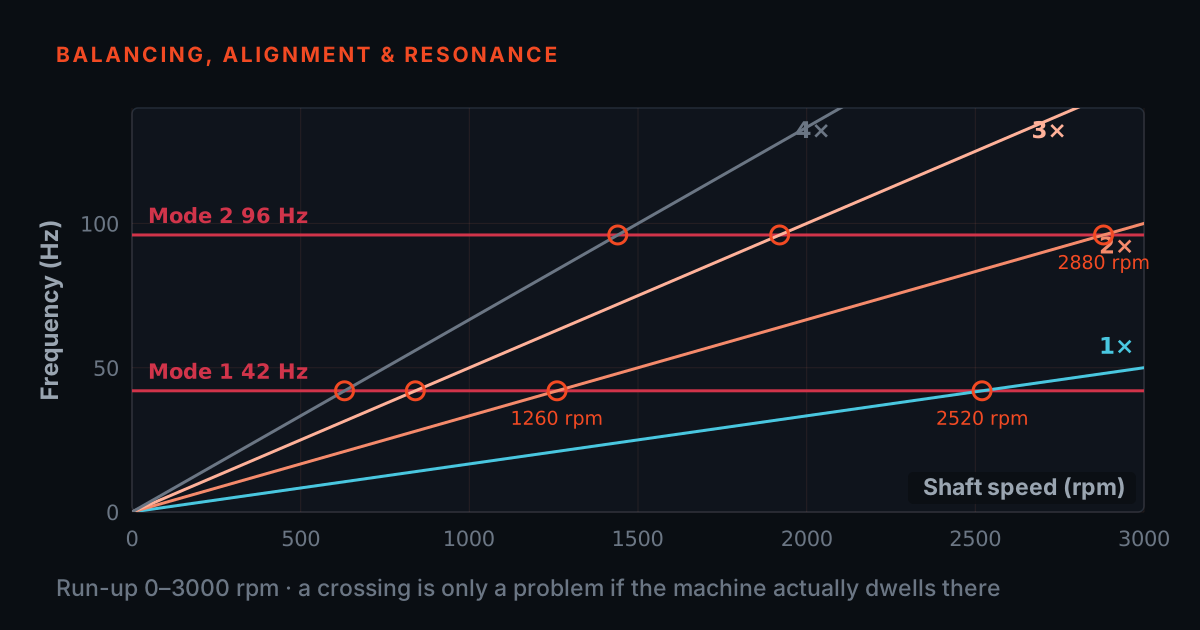
That one observation contains the whole diagnosis. There are two frequencies in play. The forcing frequency comes from rotation — once per revolution for unbalance — so it moves up and down with speed. The natural frequency belongs to the structure itself, set by its mass and stiffness, and it does not care what speed the machine runs at. Trouble arrives only where the two meet.
Why the third balancing job works no better than the first
- Balancing works on the force. Resonance works on the response — so a machine sitting on a natural frequency amplifies whatever residual force an excellent balance leaves behind.
- Two symptoms give it away before you measure anything: vibration that is very sensitive to a small speed change, and trial weights that never behave the way the vectors predicted.
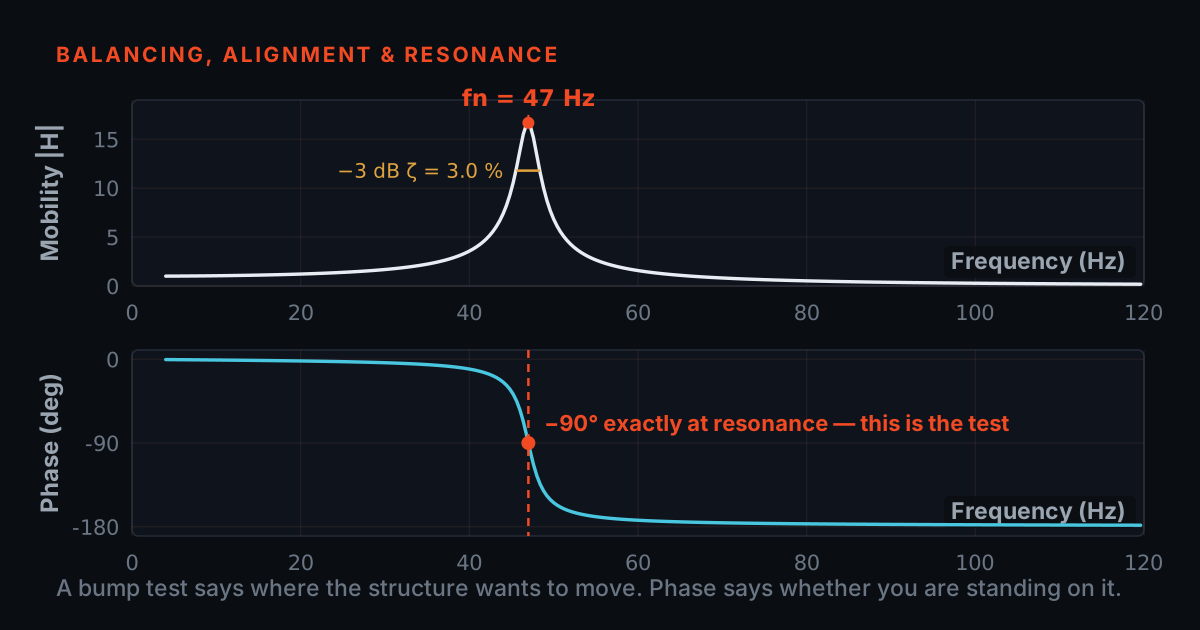
Balancing reduces the force. Resonance multiplies whatever force is left. If a machine runs at or near a natural frequency, even an excellent balance leaves a small residual force that the structure amplifies several times over — so the vibration comes back, the balancing contractor comes back, and the cycle repeats. The problem was never the amount of force; it was the structure's eagerness to respond to it at that particular frequency.
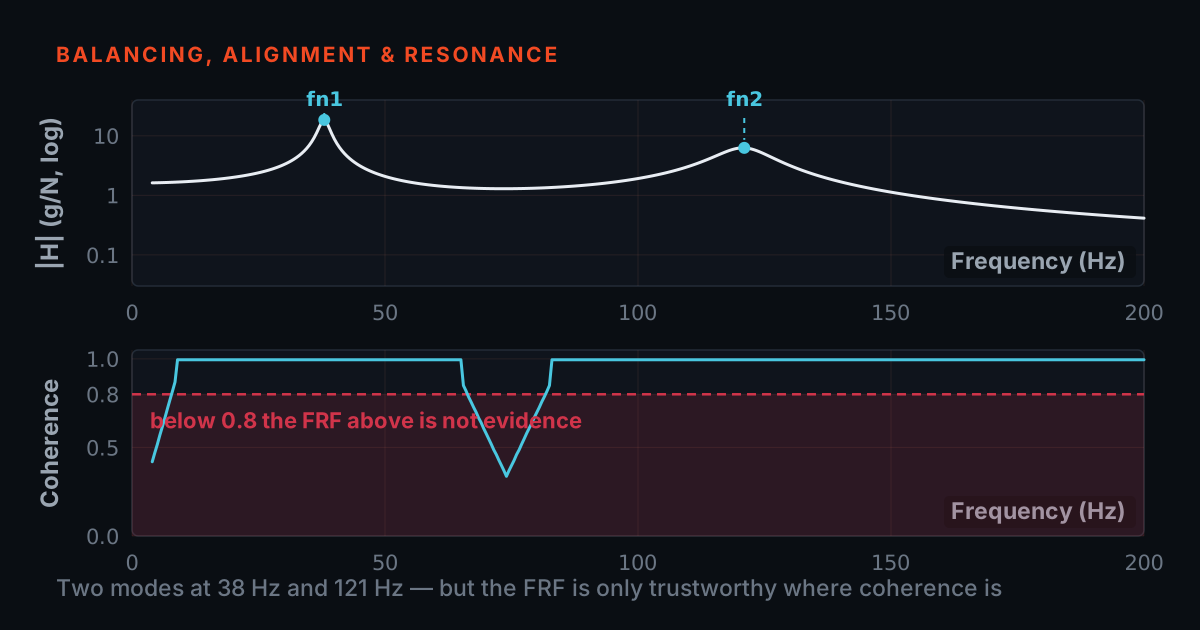
The response curve below is the signature of the situation. Below the natural frequency the structure barely responds; near it, response per unit of force climbs steeply; above it, things calm down again — which is exactly why the washing machine is smooth at full spin. Machines living near the peak also show tell-tale symptoms: vibration that is extremely sensitive to small speed changes, and trial balance weights that never behave quite the way the vectors said they should.
Field test one: the bump test
- Hitting harder makes the ring louder, never higher — the frequency is a property of the structure, so amplitude carries no information here.
- What your striker does set is bandwidth. A hard tip spreads energy far up the spectrum; a soft face or a timber block lengthens the contact and concentrates it low down, which is what a big structure needs.
With the machine switched off, strike it — a soft-faced hammer, or a block of timber on a large structure — and record what rings. A structure struck once vibrates at its own natural frequencies and nothing else, exactly like a struck bell. The amplitude dies away, but the frequency of the ring does not change: that frequency is a property of the structure, and it is the number you came for. Hitting harder only makes the ring louder — it never changes the note. What your choice of striker does set is bandwidth: a hard tip means a short contact that spreads energy far up the spectrum, while a soft face or timber block lengthens the contact and concentrates the energy low down — exactly what a big, low-frequency structure needs.
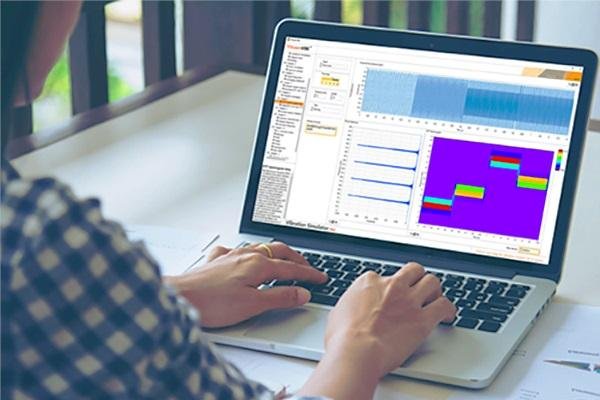
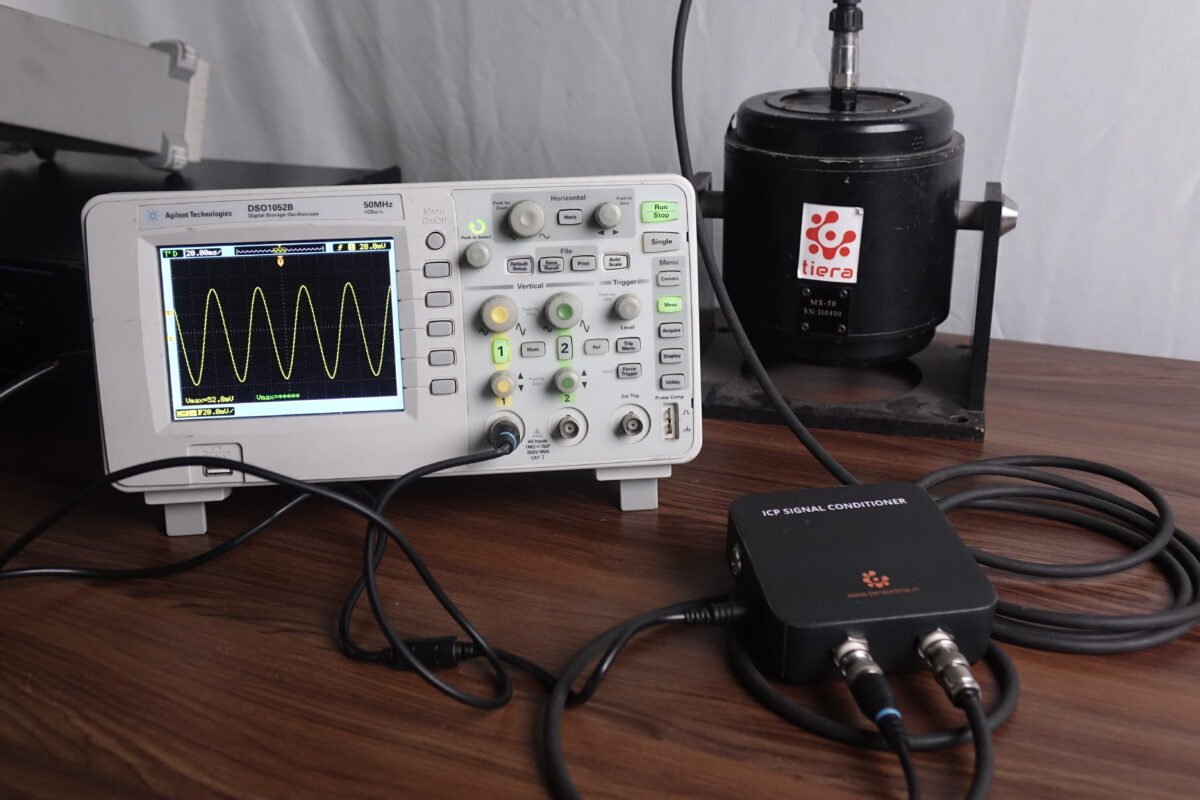
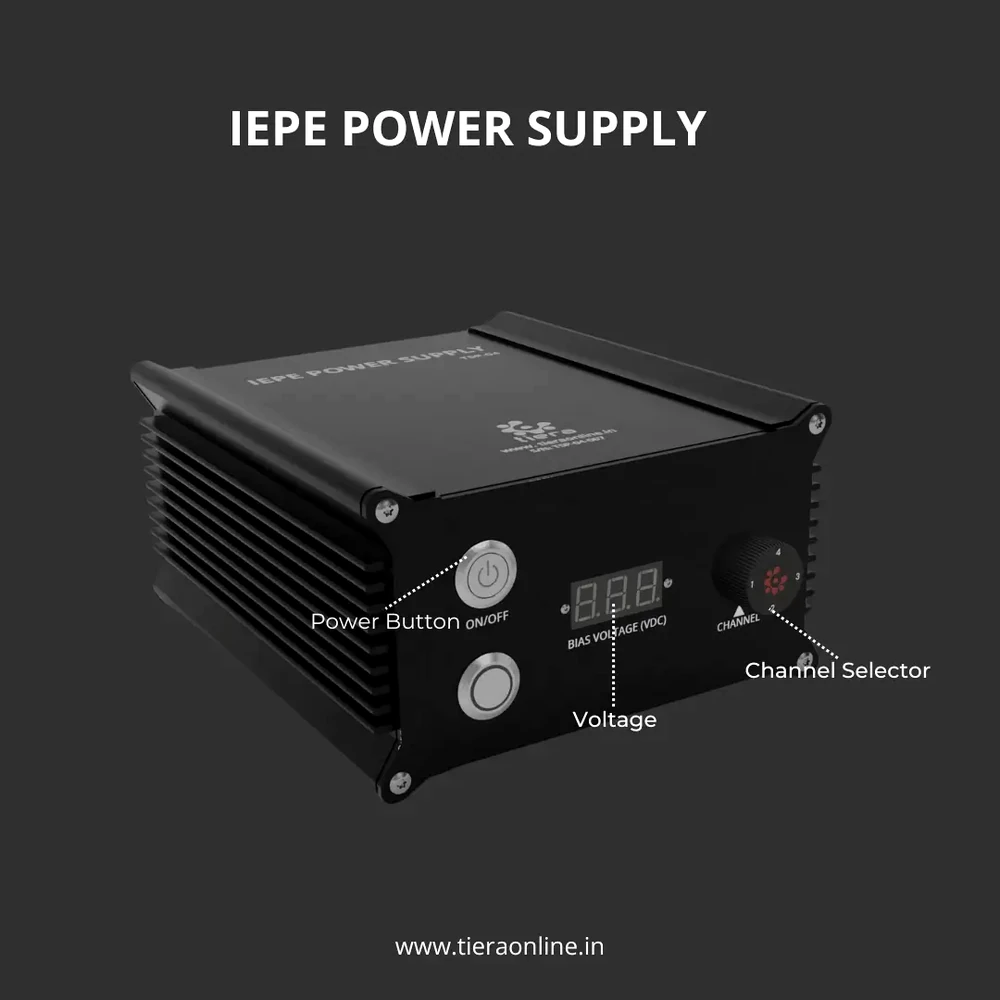
The kit is minimal: one accelerometer on the bearing housing or pedestal, a small DAQ, and an FFT. A two-channel PhonoVibe D is enough — 24-bit capture, IEPE sensor power, USB into a laptop — with the ring analysed in TVIB's TSAP201 spectrum analyzer. If a ring frequency sits at or near your running speed's 1× frequency, you have found your suspect. In a lab setting the same idea is done properly with an instrumented impact hammer and TVIB's FRF tools, but for an afternoon field answer, the simple bump is remarkably effective.
Field test two: the coast-down
- You get a resonance sweep for free: the residual unbalance force slides down through every frequency between running speed and zero, using energy already stored in the rotor.
- A peak on the way down marks a natural frequency in RPM on your own machine. A peak at or near running speed closes the case — no amount of re-balancing will hold.
- No peak at all, just amplitude shrinking smoothly with speed, means the problem really is the force: balance, alignment or looseness.
Now use the machine itself as the exciter. Cut power and record vibration continuously as it coasts to rest. The residual unbalance force slides down through every frequency between running speed and zero, and each time it crosses a natural frequency the amplitude swells, peaks, and falls away — a resonance sweep you get for free, using energy already stored in the rotor.
The reading is direct: the speed at which amplitude peaks marks a natural frequency, in the units that matter most — RPM on your own machine. (Strictly, what peaks is the forced response, not the natural frequency itself. The exciting force on a coast-down is residual unbalance, which grows with the square of speed, so that peak sits a shade above the natural frequency — at 1/√(1−2ζ²) of it — while a bump test rings a shade below it, at √(1−ζ²). Damping sets how far: at Q ≈ 6 both are within about one percent, so neither matters in the field. What does matter is that a machine coasting down fast smears the peak later still, so let it take its time through the zone.) A run-up gives the same curve in reverse. If the peak sits at or close to normal running speed, the case is closed: no amount of re-balancing will hold, because the machine operates on top of its own resonance. If instead the amplitude simply shrinks smoothly with speed and shows no peak, the problem really is the force — and balancing, alignment, or looseness work is the right response.
A representative case
A representative case, not a specific customer: a plant fan is balanced three times in a year. Each visit the vibration drops, and within weeks it creeps back. Operators also mention it runs noticeably rougher on hot days, when the drive settles at a slightly different speed. An afternoon of testing ends the argument: a bump test on the stopped fan rings at a frequency within a few percent of running speed, and a coast-down shows the amplitude peak almost exactly at operating RPM. The fan is not badly balanced — it is parked on a natural frequency of its support structure.
The fix in a case like this is structural, not rotational: stiffening the pedestal raises the natural frequency safely above running speed, and the next coast-down shows the peak moved well away from the operating point. The balance report finally stays valid, because the amplifier — not the force — was the disease.
Four ways out, and how to be sure
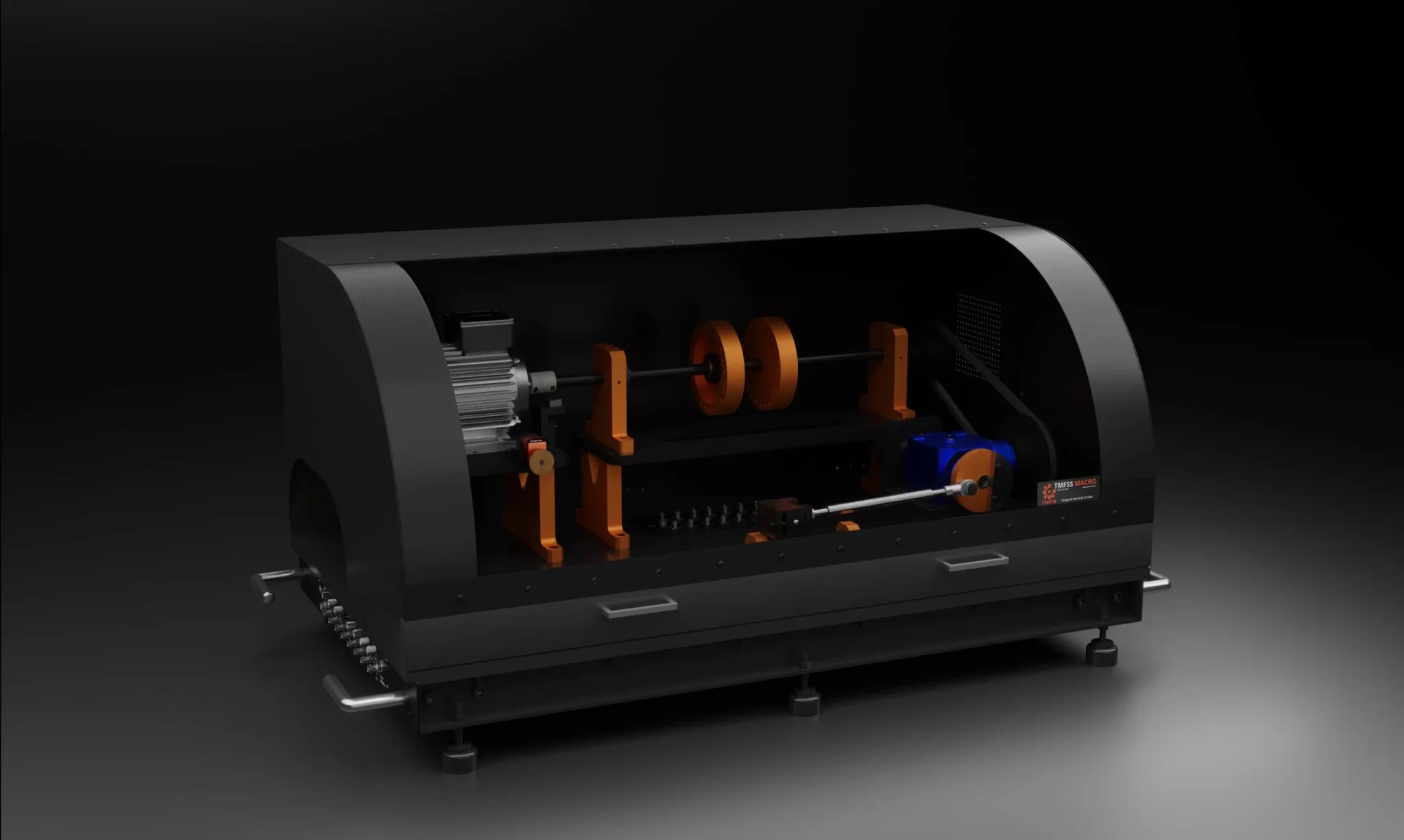
Once resonance is confirmed there are exactly four levers. Stiffen the structure and the natural frequency moves up. Add mass and it moves down. Add damping and the peak shrinks and broadens while staying essentially where it is. Or move the forcing instead — change operating speed, or remove the excitation source — so the machine no longer sits on the peak. Whichever lever you pull, verify it the same way you found it: repeat the bump test and the coast-down, and watch the peak move away from the running speed. On critical structures, teams take this further under controlled excitation: a shaker on a vertical or lateral stand, driven with sine sweeps or noise from the TWGM 206 waveform generator, with FRFs measured through PhonoVibe and TVIB — and a machinery fault simulator like TMFSS makes a safe classroom demonstration of the whole resonance story, speed sweep and all.
If you want the theory under this explainer, TIERA's free primers at 101.tieraonline.in cover it — start with Modal & Resonance 101. They are free introductions, not accredited certifications. For formal, career-grade training, TIERA's TCAT programme (see /services) runs structured courses with proctored certification exams at exams.tieraonline.in.
TIERA instruments that do this work.
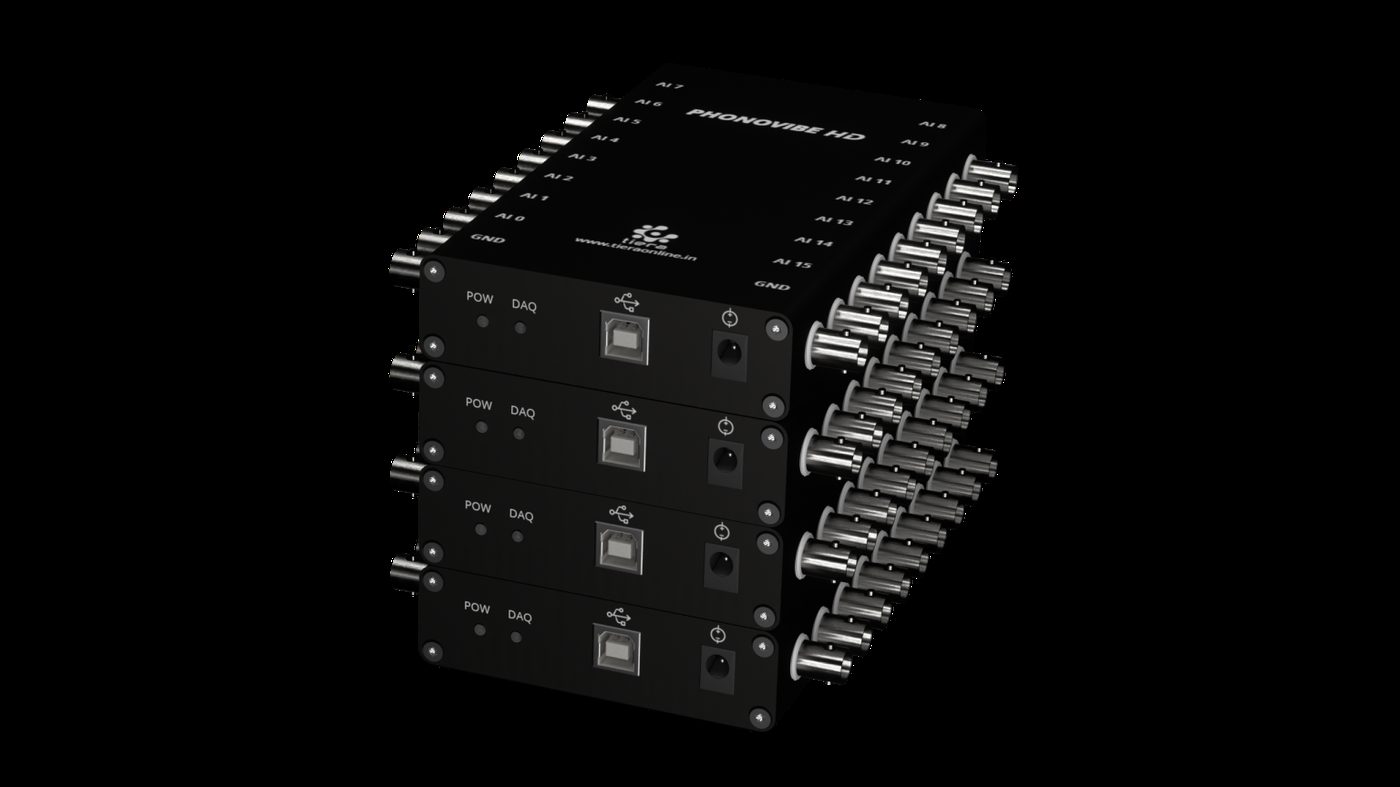
PhonoVibe Series — Sound & Vibration DAQ
Two channels are enough for both field tests in this post — the bump-test ring with the machine off, and the full coast-down after power is cut.
- Channels
- 2 / 4 / 8 / 16 (D / Q / O / HD)
- ADC
- 24-bit, simultaneous sampling on every input
- Sensor power
- IEPE / ICP / CCLD — 24 V, 4 mA constant current
- PhonoVibe D
- 48 kHz sampling · 2 Hz – 20 kHz · ±10 V input
- Calibration
- Factory calibration certificate, 1-year validity
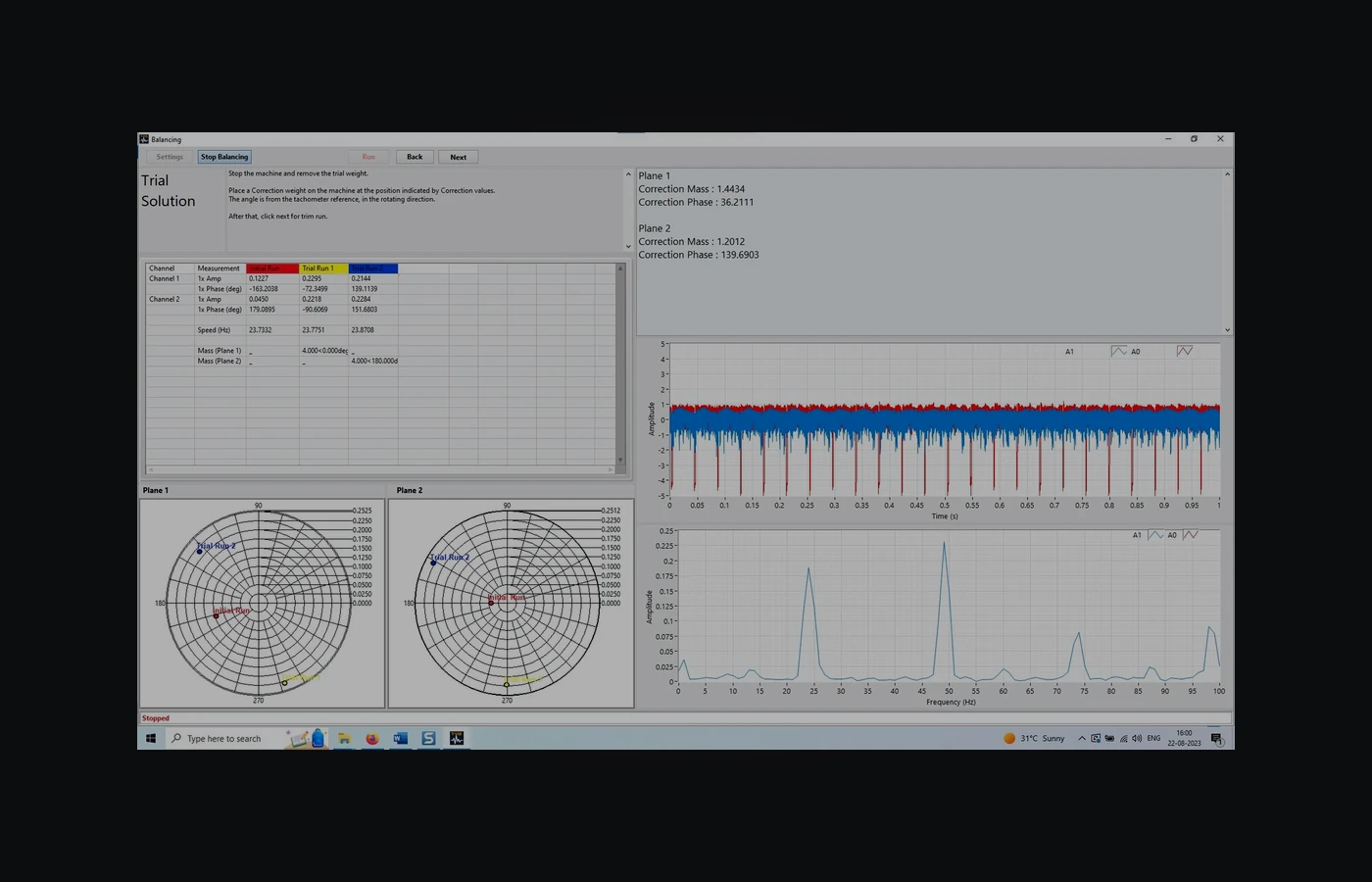
TVIB — Sound & Vibration Analysis Software
Puts a cursor on the bump-test ring frequency and the coast-down amplitude peak; TFRT and TIST 205 modules add full FRF measurement when the structure deserves controlled excitation.
- Base module
- TSAP201 — free with every PhonoVibe DAQ
- FFT size
- Up to 102,400 points
- Cursors
- Harmonic, band and sideband, in time and frequency domain
- FRF / modal
- TFRT FRF test + TIST 205 signal generator modules
- OS
- Windows 10 / 11 (32-bit or 64-bit)
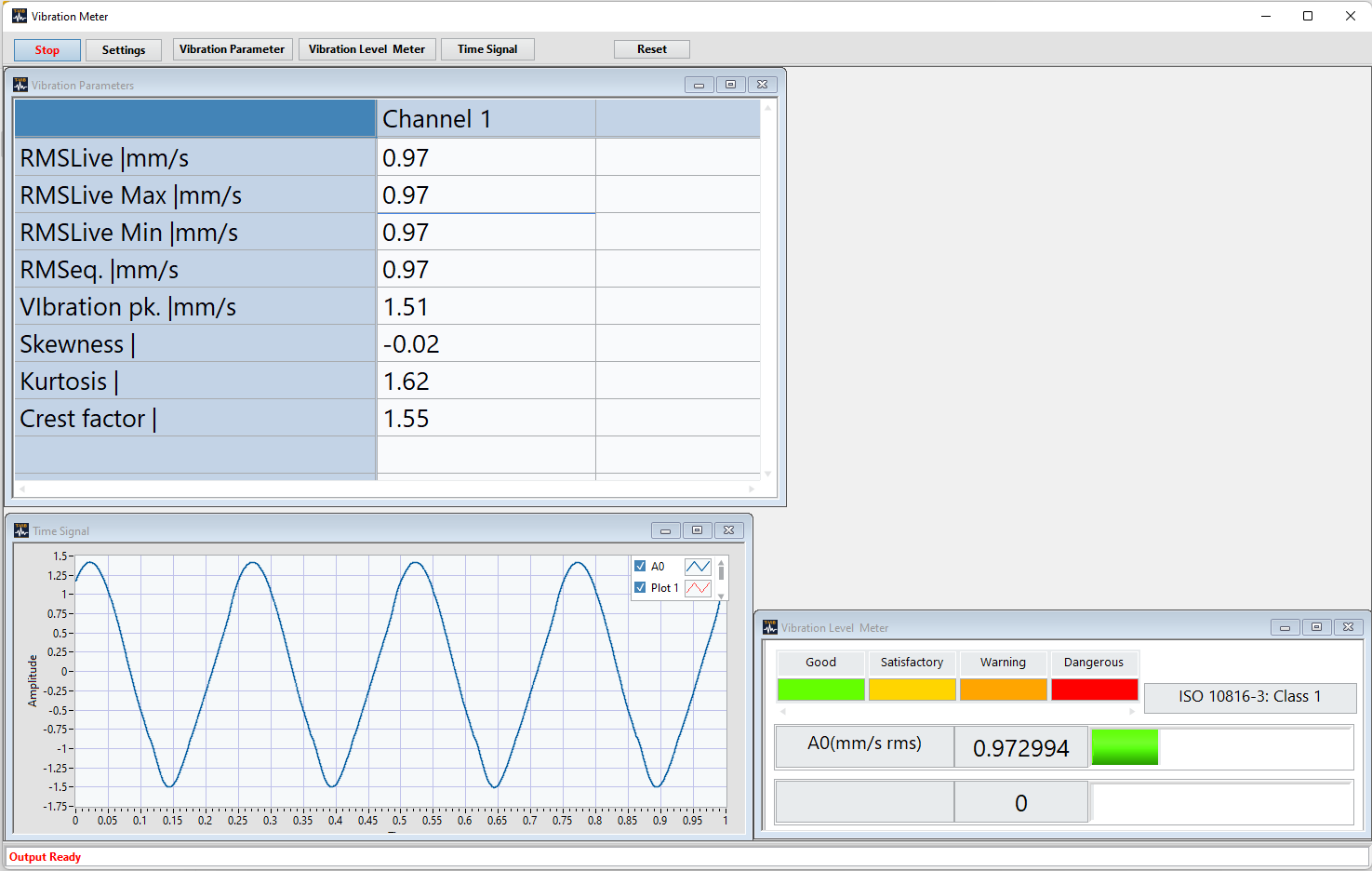
TWGM 206 — Waveform Generator
For the verification step on critical structures — controlled sine sweeps and noise through a shaker prove the natural frequency really moved after the fix.
- Signals
- Pink, white and random noise, noise burst, linear and log sine sweeps
- Noise output
- Bandpass filter limits energy to the measurement bandwidth
- Drives
- TIERA T-Xcite series electrodynamic shakers and amplifiers
- Integration
- Runs inside the TVIB software suite, output via PhonoVibe DAC
From the TIERA store
The kit for this job
What we would actually put in front of someone doing the measurement this post describes — not the whole catalogue.
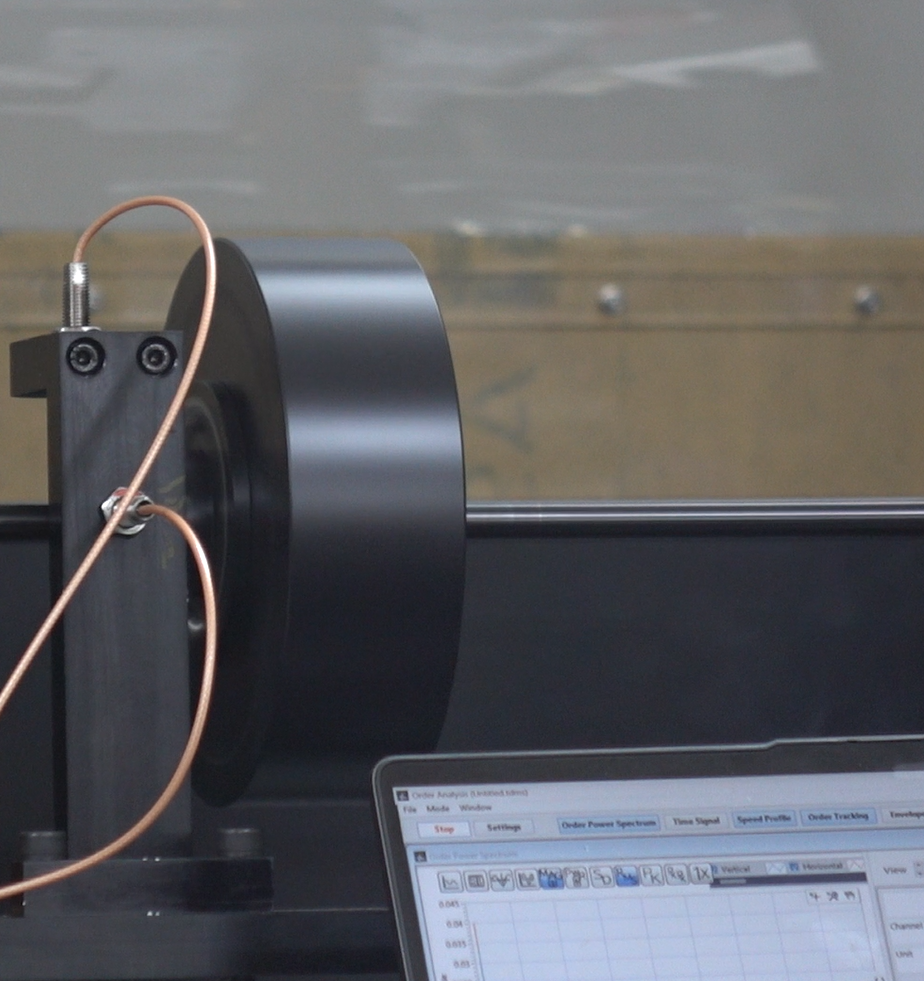 Resonance Simulation KitResonance Faults Addon Kit for the TMFSS Macro simulates resonance-related faults in industrial machines₹1,87,500View →
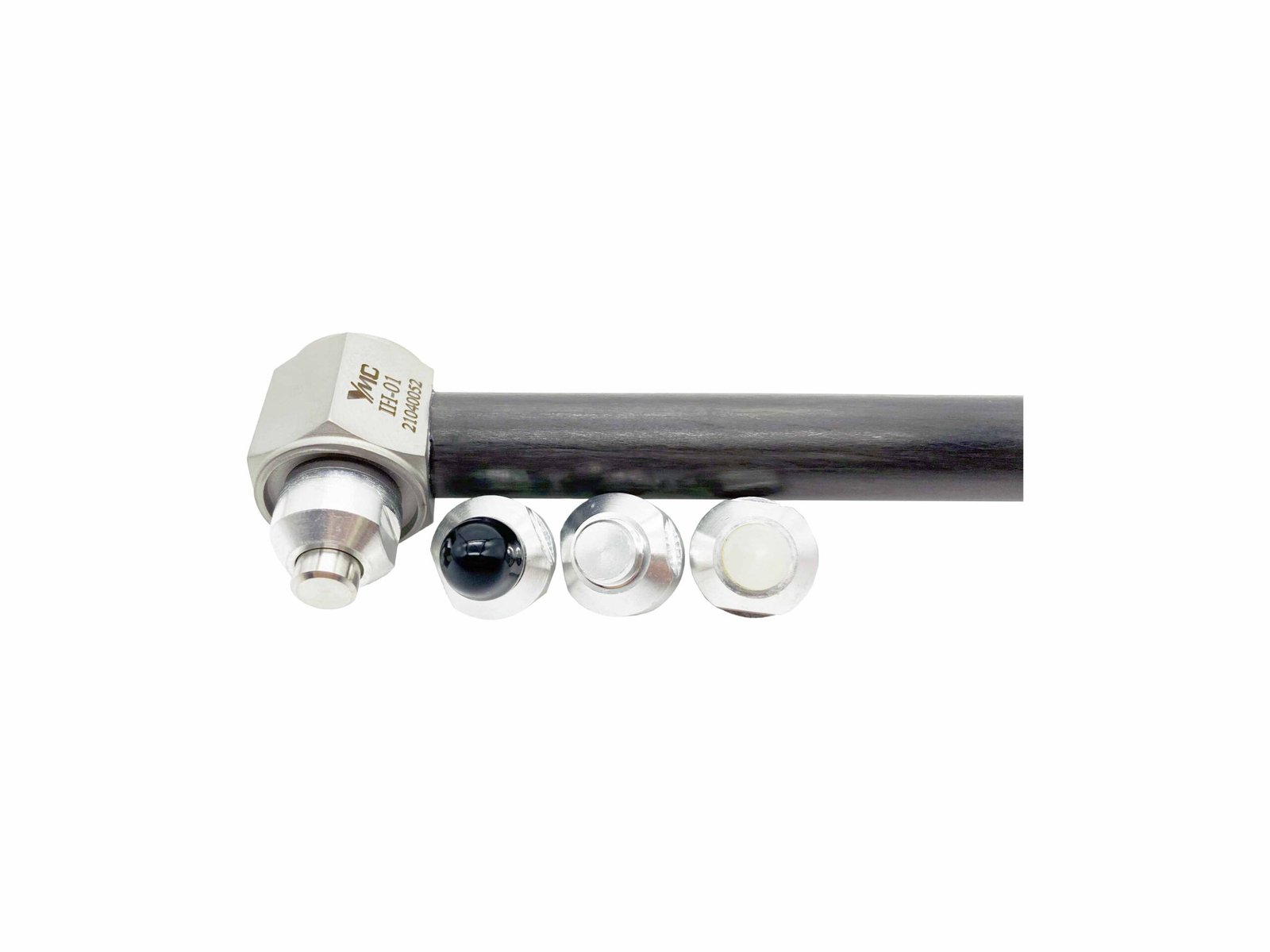 Impact Hammer-IH-01A rugged force sensor built into the hammer’s striking surface. A variety of hammers are suitable for different size test subjects. Tips offer a frequency-tailored impulse. Used for structure health testing, resonance determination, modal analysis.₹67,000View →
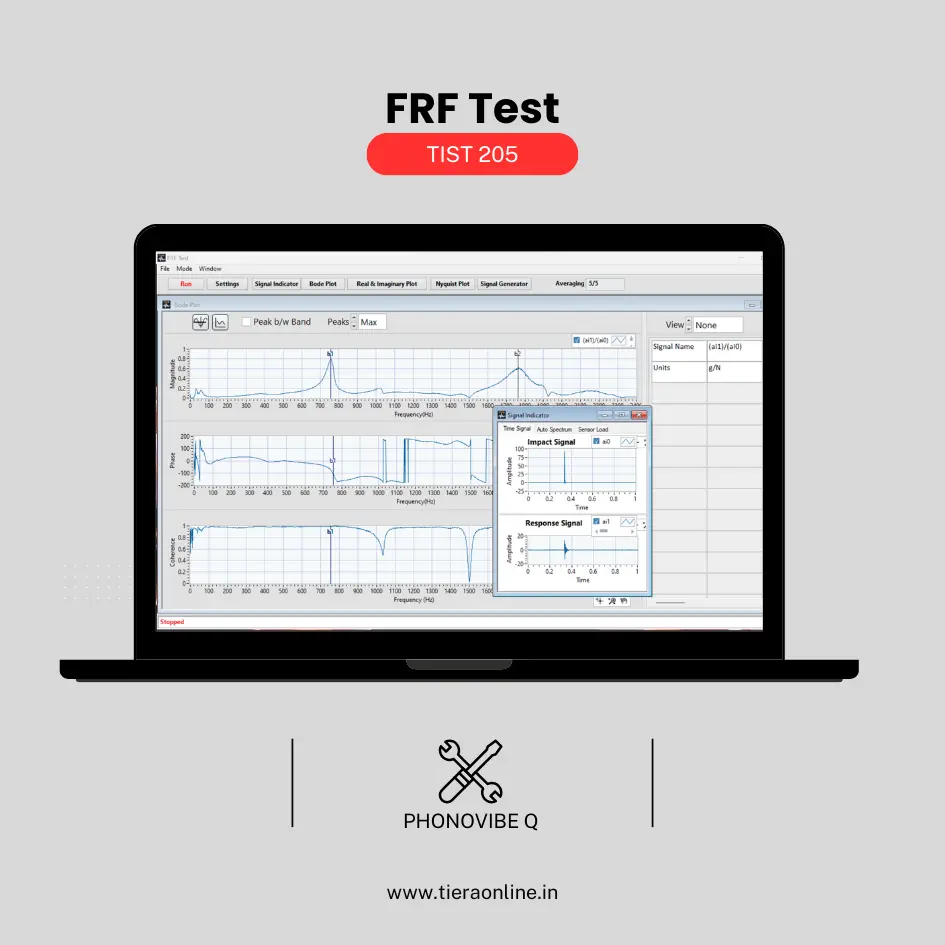 TIST 205 – FRF Test (Phonovibe Q)Use Cases Experimental Modal Analysis Product quality Natural Frequency Transmissibility,Vibration isolation Measurement₹41,472View →
Use cases
Where this shows up in the field
Settle the resonance argument with your own data — this afternoon
Both field tests in this post run on a two-channel kit. A PhonoVibe D — 24-bit capture, IEPE sensor power, USB into a laptop — records the bump-test ring with the machine off and the full coast-down after power is cut, and the bundled TVIB TSAP201 analyzer puts a cursor on the ring frequency and the amplitude peak. If the peak lands at running speed, you have the answer in data, not in opinion — and the same trace proves the fix worked afterwards.
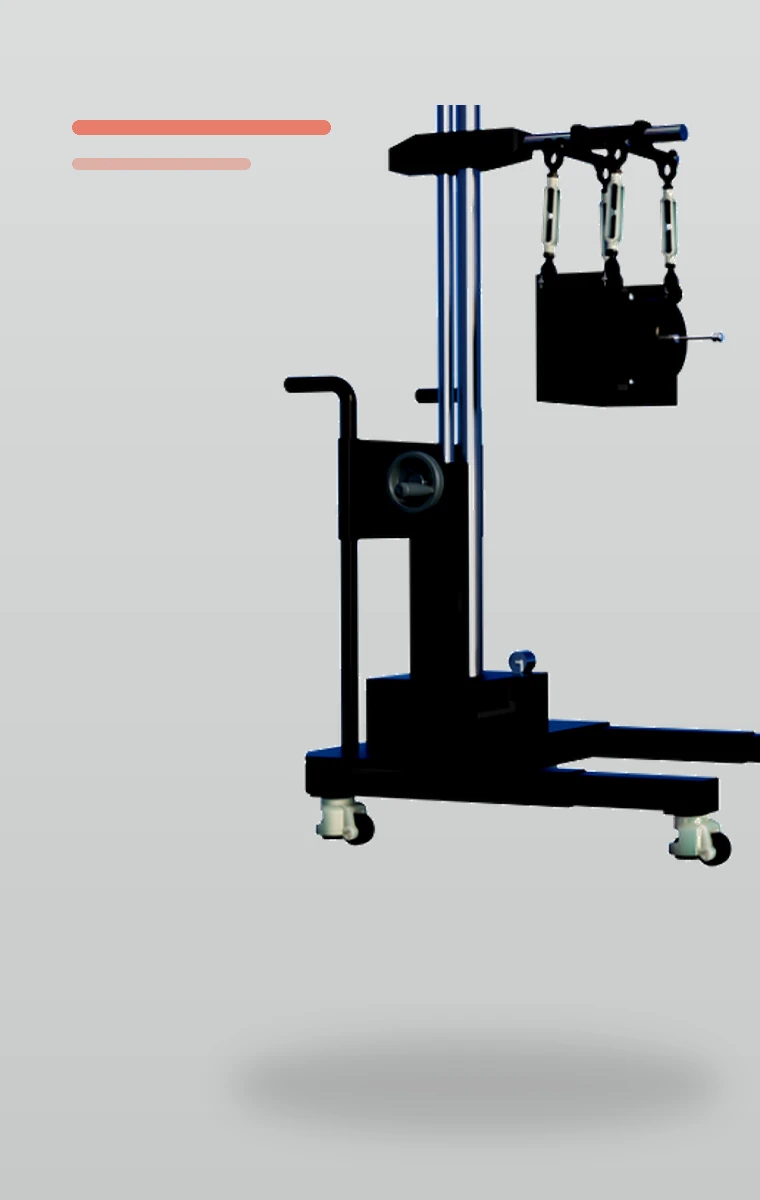
When the structure is critical enough to deserve controlled excitation, the same chain scales up: TVIB's TFRT and TIST 205 modules measure frequency response functions with a shaker positioned on TIERA's vertical or lateral stands, driven by sine sweeps, bursts, or band-limited noise from the TWGM 206 waveform generator. And if you would rather someone came and settled it, TIERA runs on-site vibration and modal testing — coast-down surveys through root-cause reporting.
- PhonoVibe D — 2-channel 24-bit USB DAQ with IEPE sensor power and a factory calibration certificate; enough for a bump test and a coast-down
- TVIB TSAP201 (free with every PhonoVibe) — narrowband FFT up to 102,400 points with harmonic and band cursors; TFRT + TIST 205 modules add full FRF measurement
- TWGM 206 waveform generator with vertical and lateral shaker stands — sine sweeps, noise bursts, and band-limited excitation for critical structures
- On-site vibration and modal testing by TIERA when you want the question settled for you
Where this sits on the TIERA learning ladder.
The theory behind this article is covered free, in full, by the TIERA 101 primers: Modal & Resonance 101. They are self-paced, interactive, and end in an exam and a certificate.
TCAT adds structured, instructor-led training on modal testing, resonance diagnosis and correction, with proctored certification exams at exams.tieraonline.in — the free 101 primers introduce the ideas but are not accredited certifications.
TIERA 101 is a free introductory primer, not an accredited ISO certification, and its hours do not count towards the formal training ISO 18436 requires.