
Starting a Condition-Monitoring Programme Without Buying Everything at Once
The practical first 90 days: pick the machines that actually matter, define a repeatable route, take a baseline while they are healthy — and only then argue about alarm limits.
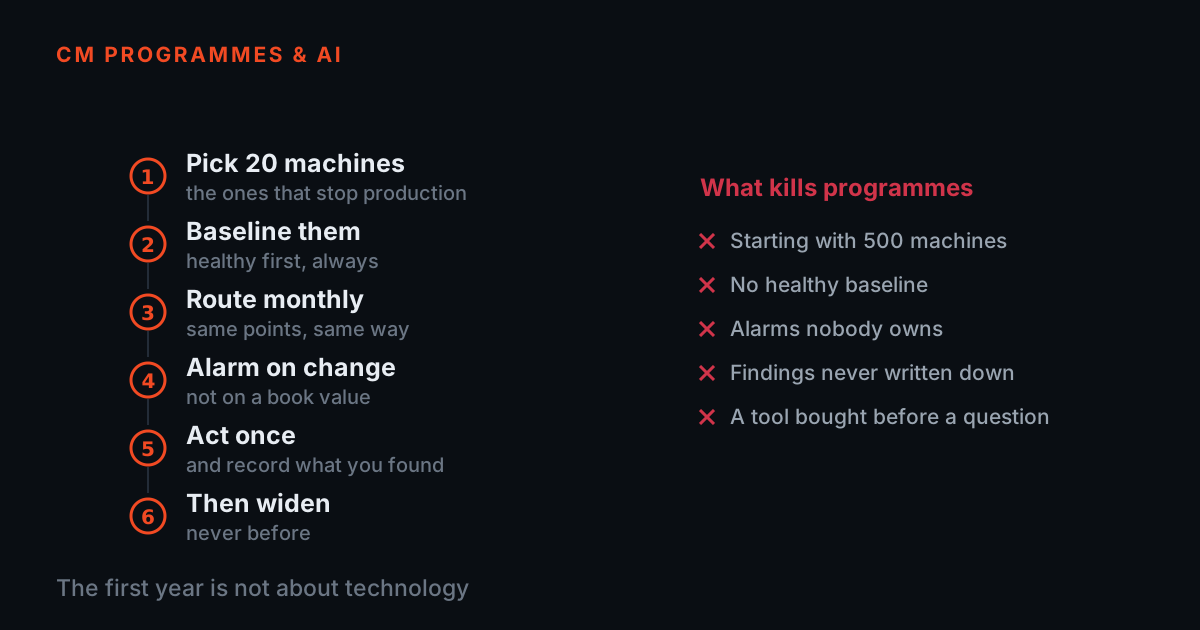
Start with fewer machines than you think
- Rank every candidate on two axes — what a failure costs, and how likely it is. The unspared, high-consequence corner is route one.
- Ten to fifteen machines measured properly every time beats eighty measured badly.
- Review the matrix each quarter, so nothing is excluded forever and the route grows only when it can be kept.
A condition-monitoring programme is a commitment, not a purchase. The failure mode is rarely the instrument: it is the programme that starts with eighty machines, falls behind by month two, and quietly stops — leaving data nobody trusts and alarms nobody answers. A half-run programme that nobody acts on is worse than none, because it teaches the plant that vibration monitoring does not work. So the first decision is not which DAQ to buy. It is which machines earn a place on the route.
Rank every candidate on two axes: what a failure costs (production stop, safety exposure, spare-part lead time) and how likely a failure is (duty, age, history, whether it has a standby). The unspared, high-consequence machines in the hot corner go on route one. A first route of ten to fifteen machines measured properly every time beats eighty measured badly — and the matrix gets reviewed each quarter, so nothing is excluded forever.
A route and an interval you can actually keep
A route is a fixed list: which machines, which points on each machine, in which order, at which settings. Forty machines at six points each, twice a month, is a day's work with a portable chain — a PhonoVibe Q or O, an accelerometer, and TVIB fit in a carry bag, and a two-channel PhonoVibe D covers a smaller starting route. The discipline that makes the data comparable is boring on purpose: same sample rate, same frequency range, same averaging count, every visit.
Pick an interval you can sustain, not the one that sounds impressive. Twice a month is a common rhythm for critical rotating machinery, but a monthly route walked every month beats a weekly route abandoned after six weeks. Put the route on the maintenance calendar with a named owner — consistency is worth more than frequency, because the trend only exists if the visits keep happening.
The baseline: the most valuable measurement you will ever take
- Machines have personalities. A healthy gearbox does not read like a healthy fan, and neither reads like the chart in the textbook.
- At every point capture a time waveform and a spectrum, and record the settings beside them — sample rate, span, averaging count, mounting method, exact position. That bundle is the machine's fingerprint.
- Without it you are guessing whether today's reading is normal for this machine, which is the guessing the programme exists to replace.
The single most valuable measurement in the life of a programme is the one taken while the machine is healthy, because every diagnosis you make afterwards is a comparison against it. Machines have personalities: a perfectly healthy gearbox does not read like a perfectly healthy fan, and neither reads like the chart in a textbook. Without a baseline, you are left guessing whether today's reading is normal for this machine — and guessing is exactly what the programme exists to replace.
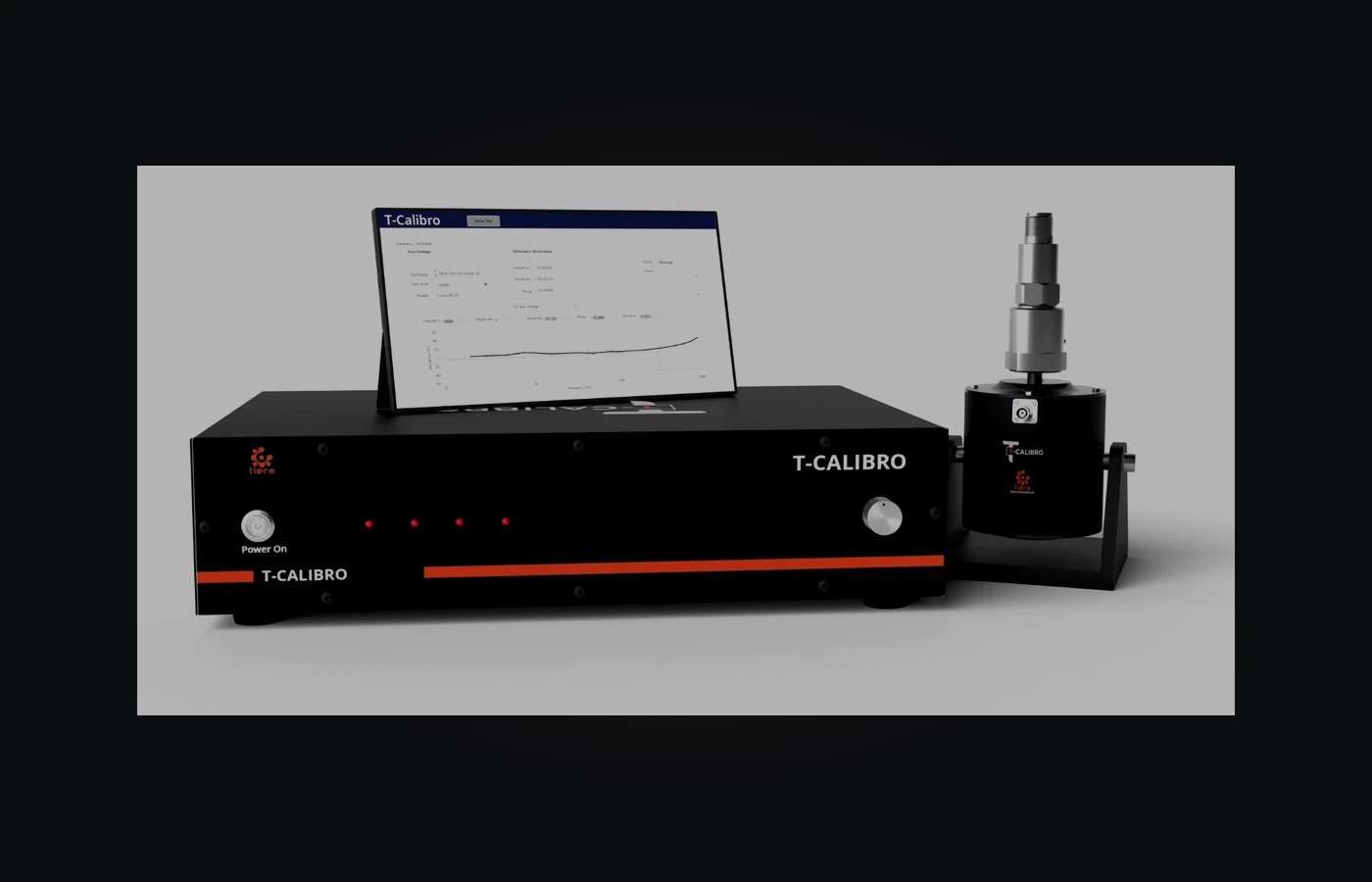
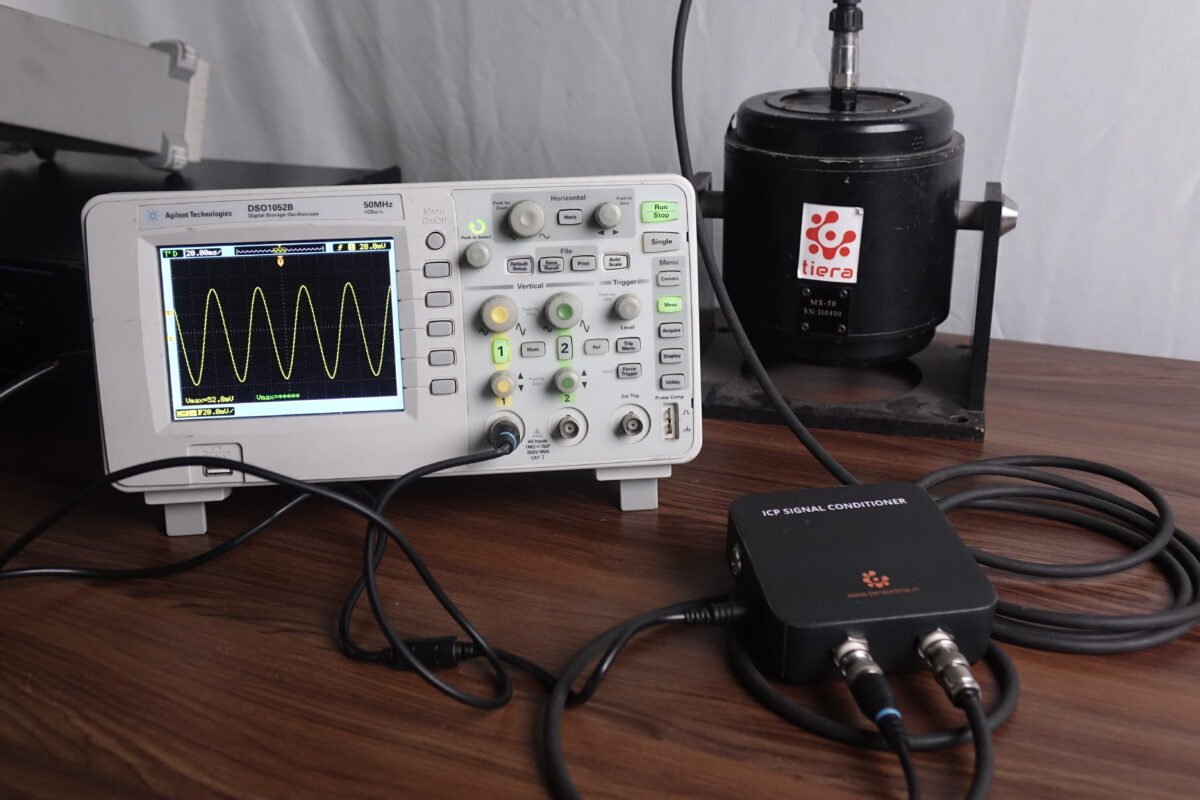
At each point on the route, capture a time waveform and a spectrum and record everything alongside it: sample rate, frequency span, averaging count, mounting method, and the exact sensor position. That bundle is the machine's fingerprint. It is also why the measurement chain matters early — a PhonoVibe DAQ ships with a factory calibration certificate valid for one year, so the sensitivity behind every number is a stated, dated figure rather than an assumption, and a change in the trend is less easily blamed on the instrument. (Traceability in the metrological sense is a separate exercise — an unbroken calibration chain back to a national standard — and it is what the T-Calibro bench calibrator exists for.)
Same spot, same mount, every time
Trending only works if the measurement is repeatable, and the quickest way to ruin repeatability is mounting. The same machine, on the same day, reads differently from a spot a few centimetres away — a reading taken on a cooling fin is not comparable to one taken on the bearing housing, and neither tells you anything if next month's technician picks a third spot. Mark every point permanently: a paint mark at minimum, an adhesive pad for a dedicated location, and a quick-release magnetic mount for walk-around collection.
The rule to enforce is simple: a change in the trend must mean the machine changed, not the technician. Photograph each point during the baseline visit and put the photos in the route sheet. Low-noise cabling earns its keep here too — coaxial cable that flexes under vibration generates its own spurious signal, which is one more way to see a change that is not the machine.
- Mark every point permanently — paint at minimum, an adhesive pad for a dedicated location.
- Photograph each point on the baseline visit and keep the photos in the route sheet.
- Use the same sample rate, span and averaging count every visit.
- Use low-noise cable rated to flex under vibration.
- Move the sensor a few centimetres to reach a spot that is easier to get at.
- Measure on a cooling fin and trend it against a bearing-housing reading.
- Leave the mounting method to whoever walks the route this month.
- Explain a step in the trend as machine condition before ruling out the measurement.
Trend beats absolute value — argue about alarm limits last
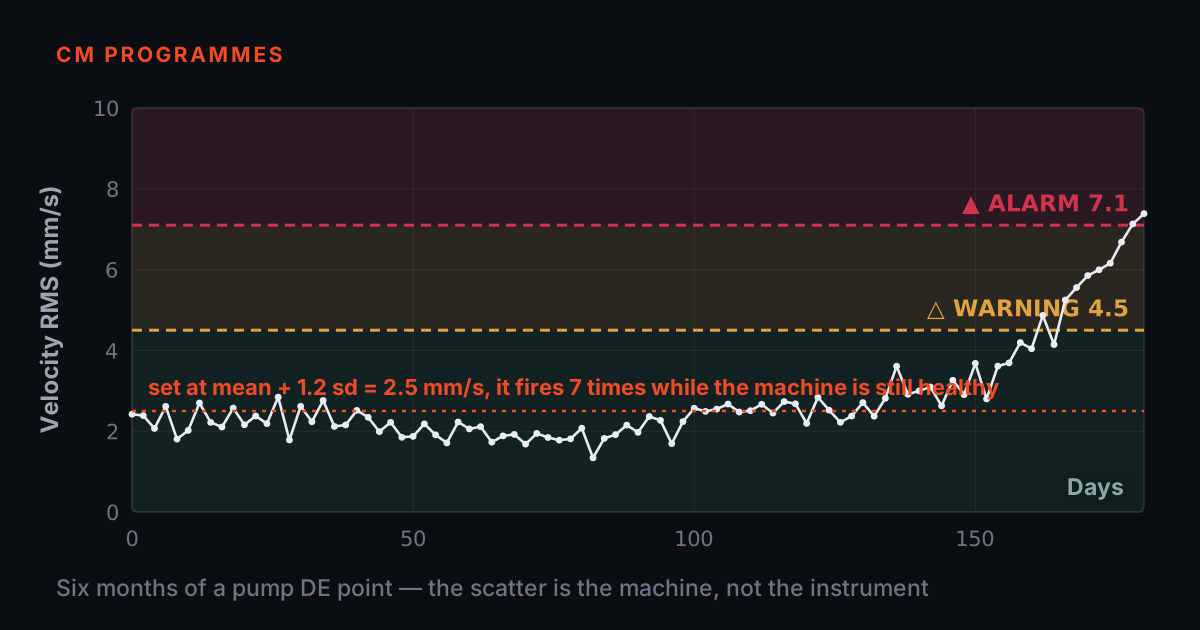
- A machine that has read 4 mm/s since commissioning is less likely to be developing a fault than one that drifted from 1.5 to 3 over three months — even though the second looks better on paper.
- You cannot set a sensible limit for a machine whose normal you have never measured, which is why limits come last.
- After half a dozen visits you know the normal scatter, and the bands can be set against it: alert means plan the work, alarm means act.
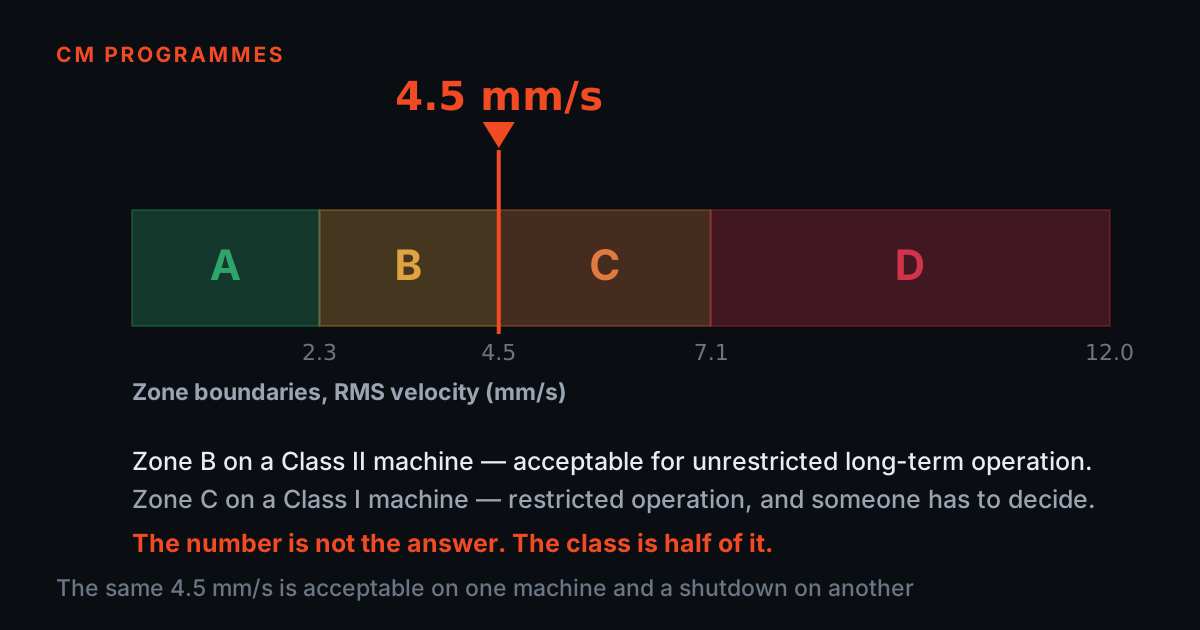
A severity chart cannot know your machine. A fan that has read 4 mm/s since the day it was commissioned, and still does, is far less likely to be developing a fault than one that drifted from 1.5 to 3 over three months — even though the second machine looks better on paper. (The steady 4 mm/s machine may still be worth investigating on its own merits; what it is not is changing.) Absolute limits are a useful backstop; the early warning lives in the trend, which is why alarm limits are the last thing to set, not the first. You cannot set a sensible limit for a machine whose normal you have never measured.
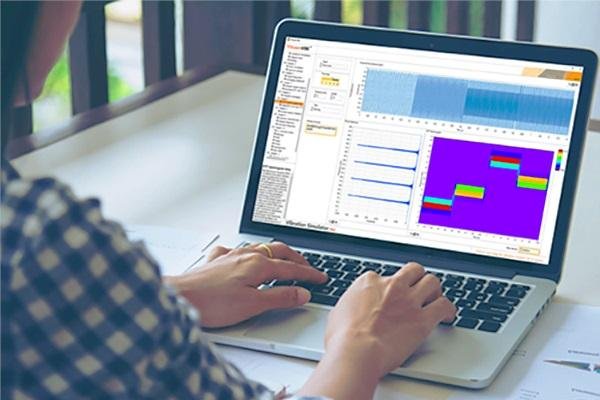
After half a dozen route visits you know the machine's normal scatter, and alert and alarm bands can be set relative to it: alert means plan the work, alarm means act. In TVIB, band cursors let you put alarm bands around the frequencies that matter — bearing defect frequencies, gear mesh — so rising energy in those bands flags trouble while the overall level still looks respectable. The office routine from there is short: compare today's spectrum against the baseline and the last three visits.
A representative first 90 days — and the half that is human
A representative rollout, not a specific customer: a mid-size plant scores its machine list and picks twelve for route one. Month one is baselines — every point measured healthy, pads fixed and photographed, settings written down, with a four-channel DAQ covering motor and driven-end bearings at each stop. Months two and three are the route, twice a month, same order every time. By day ninety there are five or six trend points per machine and a first draft of alert bands. Nothing dramatic has been found, and that is the point: the plant now knows what normal looks like, which is the one thing it could not have bought.
Because here is the honest part: programmes fail on skill and follow-through, not on hardware. Someone has to read the spectra, and someone has to turn a rising trend into a work order. If the alert fires and nothing is scheduled, the programme is theatre — and expensive theatre reads worse than none. Budget for the person before the fourth instrument.
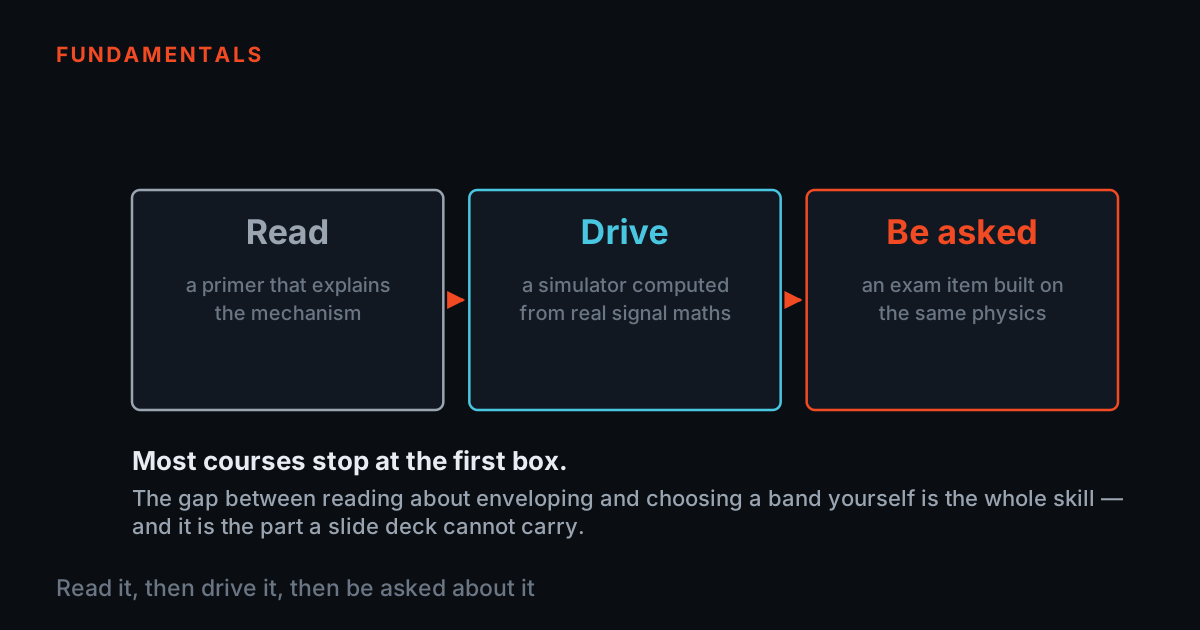
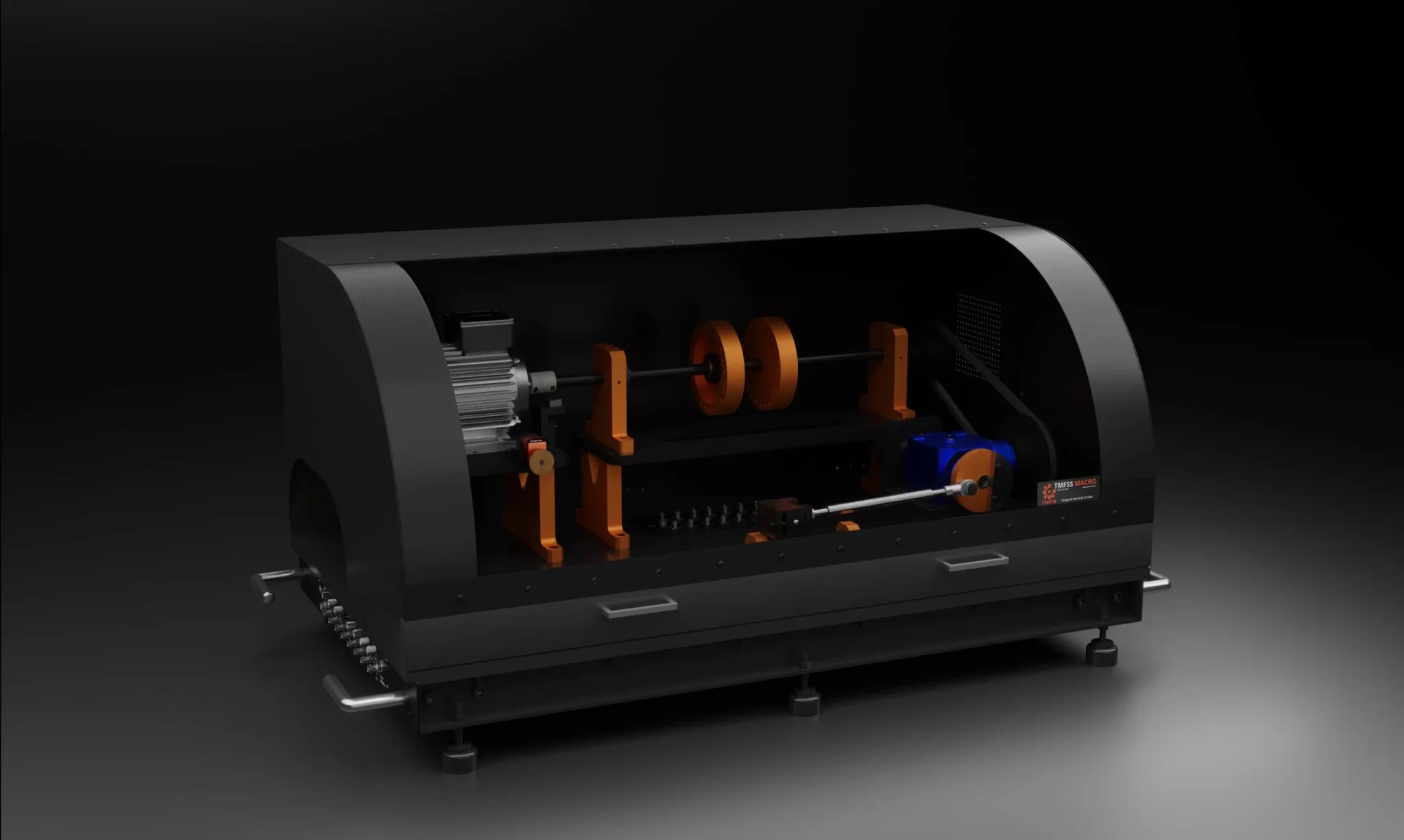
Building that person is a ladder. The free TIERA 101 primers at 101.tieraonline.in get a new technician reading a spectrum — they are free primers, not accredited ISO certification, and their hours do not count towards formal ISO 18436 training requirements. For a credentialed analyst there is the formal TCAT programme, Category I through IV, detailed on our services page, with proctored examinations at exams.tieraonline.in. In between, ToLearnVibe drills fault recognition on 100+ simulated scenarios covering the ISO 18436-2 Cat I and Cat II syllabus, and a TMFSS gives the team controlled, repeatable faults to practise on before the real machine presents one.
TIERA instruments that do this work.
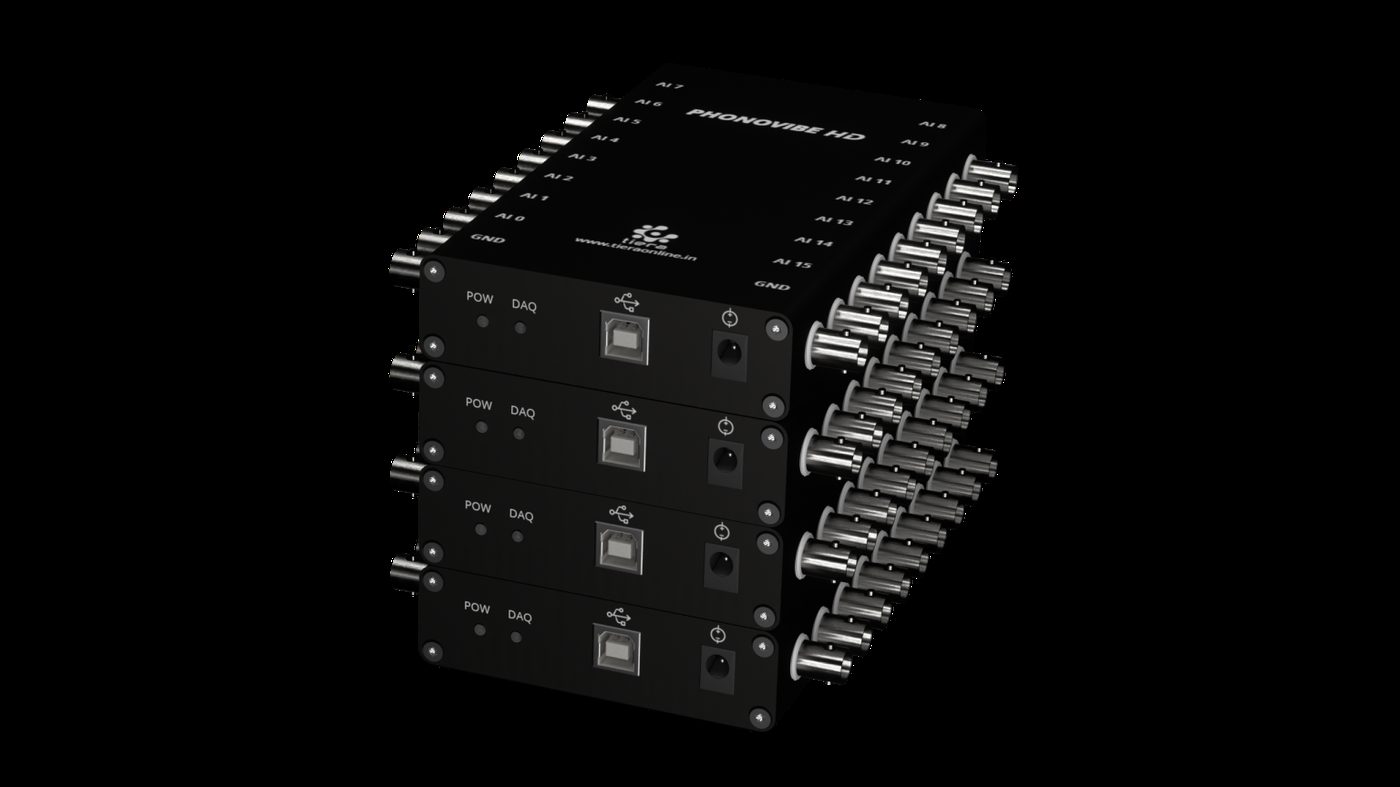
PhonoVibe Series — Sound & Vibration DAQ
A two-channel PhonoVibe D covers a small starting route; the four-channel Q takes motor and driven-end bearings in one stop — calibrated from day one.
- PhonoVibe D
- 2 ch · 48 kHz · 2 Hz – 20 kHz · ±10 V input
- PhonoVibe Q
- 4 ch · 128 kHz · 0.5 Hz – 60 kHz · ±5 V input
- Resolution
- 24-bit ADC, simultaneous sampling
- Sensor power
- IEPE / ICP / CCLD — 24 V, 4 mA; TEDS recognition
- Calibration
- Factory certificate, 1-year validity

Sensors & Accessories
Route repeatability lives here: marked points, a quick-release magnetic mount, adhesive pads for non-magnetic surfaces, and low-noise cabling.
- Accelerometers
- General-purpose, compact, and low-frequency IEPE variants
- Mounts
- Quick-release magnetic mount; SS304 triaxial block; adhesive pads
- Cables
- Low-noise coaxial (CA-101) and armored (CA-103), 5 m standard
- Microphone
- 130F20 ICP® electret array for acoustic measurements
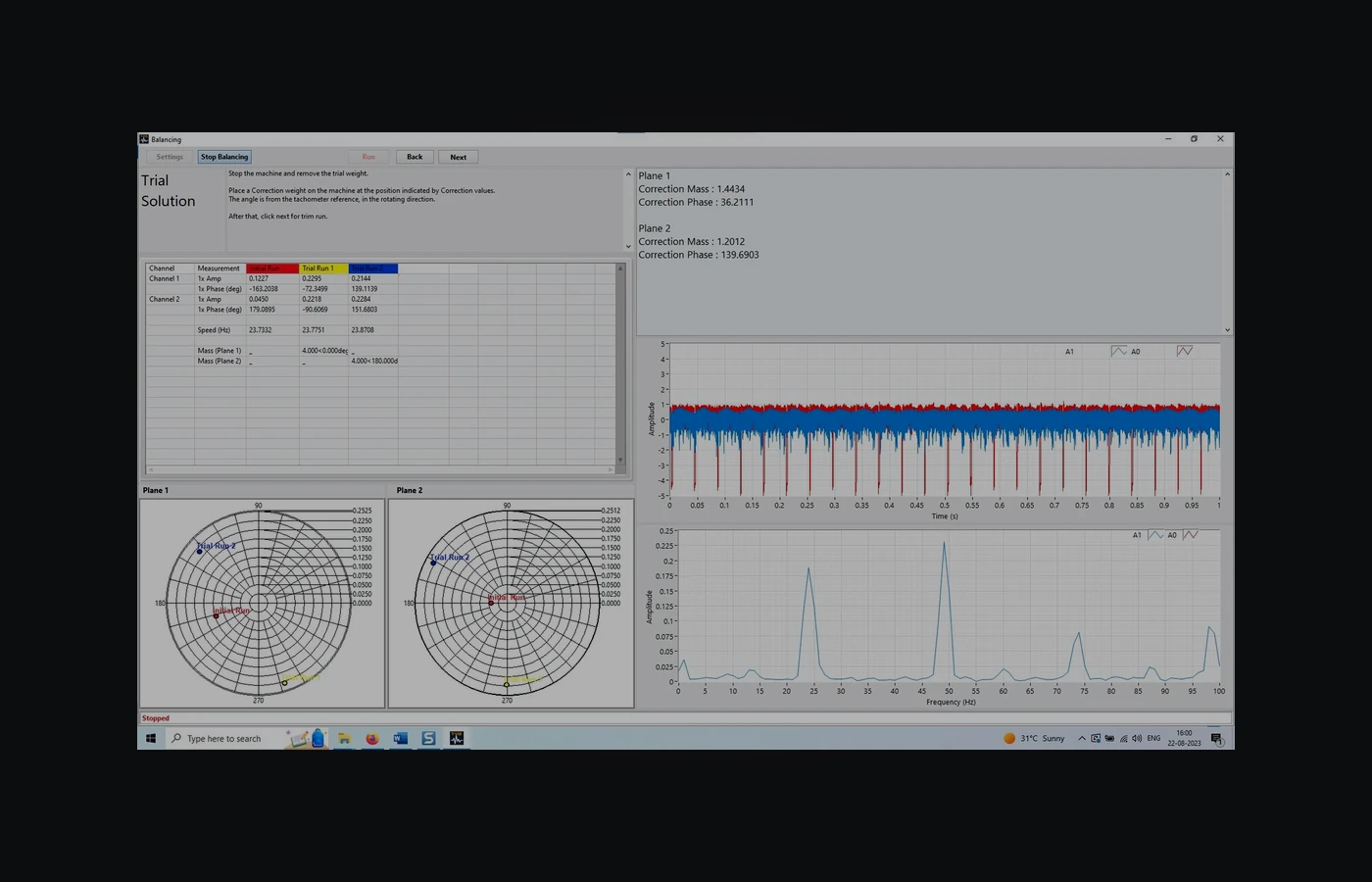
TVIB — Sound & Vibration Analysis Software
Bundled free with every PhonoVibe — trending spectra against your baseline and setting alert bands costs nothing extra.
- Base module
- TSAP201 — free with PhonoVibe
- FFT size
- Up to 102,400 points
- Cursors
- Harmonic / band / sideband
- Licence
- Perpetual; free updates for 2 years, AMC after
From the TIERA store
The kit for this job
What we would actually put in front of someone doing the measurement this post describes — not the whole catalogue.
- Field Vibration Starter KitEverything to start walk-around vibration monitoring in the field — a 4-channel IEPE DAQ, a general-purpose accelerometer and a sensor cable in one indicative-priced kit.Request priceView →
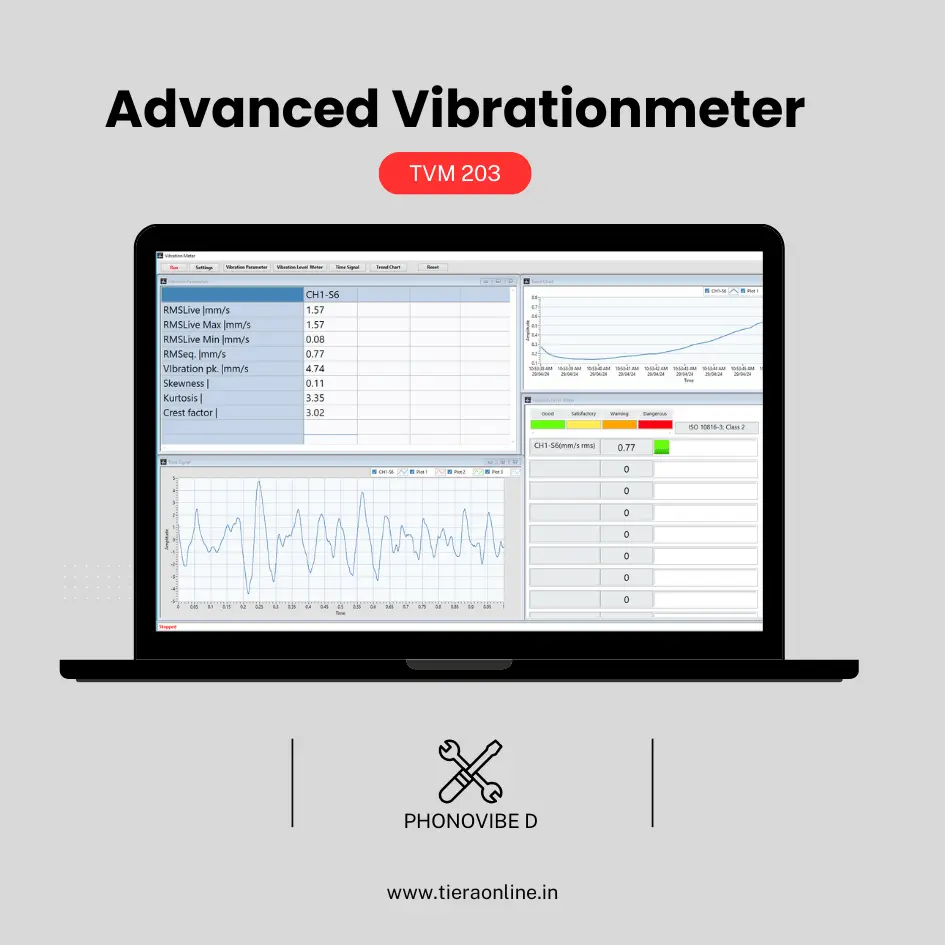 TVM 203 -Advanced Vibrationmeter (Phonovibe D)Use Cases Off route Machine Vibration analysis Product Development & Research₹30,240View →
- Training KitsCompact, classroom-friendly hardware bundles that pair with TCAT Cat I / Cat II syllabi — bearing-fault rigs, balancing benches, and structural-modal demonstrators. Designed to fit a 6-ft table.Request priceView →
Use cases
Where this shows up in the field
Start with one walk-around kit, ten machines, and a route you can keep.
Everything route one needs fits in a carry bag: a two-channel PhonoVibe D for a small starting route (a four-channel Q when you want motor and driven end in one stop), an IEPE accelerometer with a magnetic mount and adhesive pads for the marked points, low-noise cabling, and TVIB — the analysis software is bundled with every PhonoVibe, so trending spectra against your baseline costs nothing extra.
You do not have to make the first calls alone, either. Talk our engineers through your machine list and we will help you shortlist route one and, once a few visits of real baseline data exist, set alert and alarm bands around the frequencies that matter for those machines — from your machines' normal, not a chart's.
- PhonoVibe D (2-channel) and Q (4-channel) — 24-bit USB DAQs with IEPE sensor power, each shipping with a factory calibration certificate (1-year validity), so the sensitivity behind day one's baseline is a stated, dated number.
- TVIB TSAP 201 bundled free with every PhonoVibe — time waveform, narrowband FFT, averaging, and harmonic/band/sideband cursors for setting alert bands around bearing and gear-mesh frequencies.
- Route hardware that protects repeatability — quick-release magnetic mount and adhesive pads for marked points, plus low-noise coaxial cables that minimise the spurious signal from cable flex.
- A training ladder for the human half — free TIERA 101 primers (a free primer, not accredited ISO 18436 certification), To-Learn Vibe fault-recognition drills, and the formal TCAT programme when you need a credentialed analyst.
Where this sits on the TIERA learning ladder.
The theory behind this article is covered free, in full, by the TIERA 101 primers: Vibration 101 (Foundations), Machinery Fault Diagnosis 101. They are self-paced, interactive, and end in an exam and a certificate.
The free primers teach a technician to read a spectrum; TCAT (Cat I–IV, with proctored exams) builds and verifies the credentialed analyst who can own the programme.
TIERA 101 is a free introductory primer, not an accredited ISO certification, and its hours do not count towards the formal training ISO 18436 requires.