Pass or Fail in Seconds: How End-of-Line Noise and Vibration Testing Works
How a production line turns a skilled inspector's ear into a repeatable, auditable spectral limit test: why one overall number is too blunt, how band masks judge each unit, and why the limit itself is an economic decision.
A verdict, not an opinion
- The problem with the inspector who can hear a bad unit is not their skill — it is that their ear cannot be audited, repeated across shifts, or applied to every unit.
- End-of-line testing writes that ear down as numbers: fixture, sensor, DAQ, stored limit, lamp.
- The output is a verdict with a record behind it, which is what a warranty claim needs and an opinion cannot supply.
Every production line has that one inspector who can hear a bad unit. A faint click in a driveshaft, a whine in a motor, a rattle in a pump — they spin it up, listen for a few seconds, and wave it through or pull it off. The problem is not their skill. The problem is that their ear does not scale: it is not repeatable across shifts, it cannot be audited when a warranty claim comes back, and it cannot judge every unit when the line needs a verdict in seconds, unit after unit, all shift long.
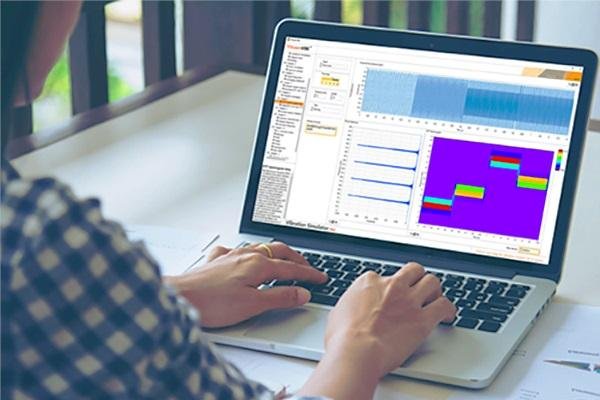
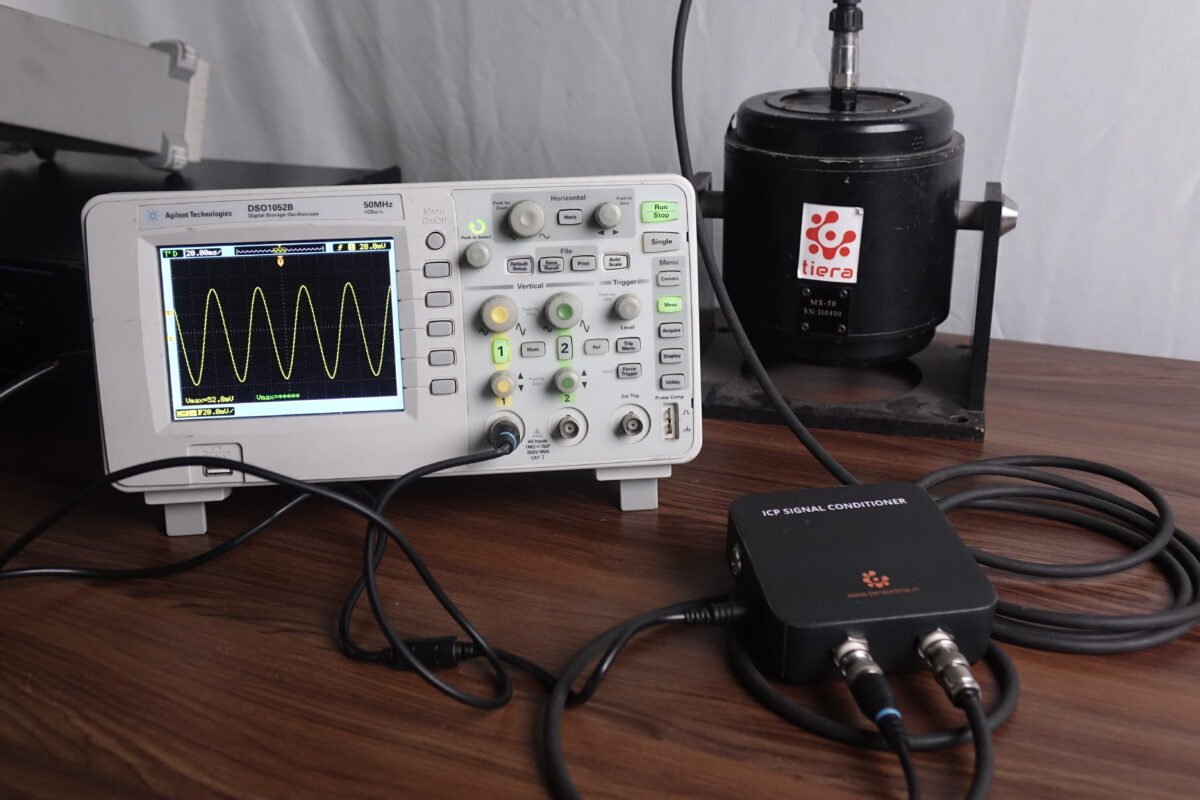
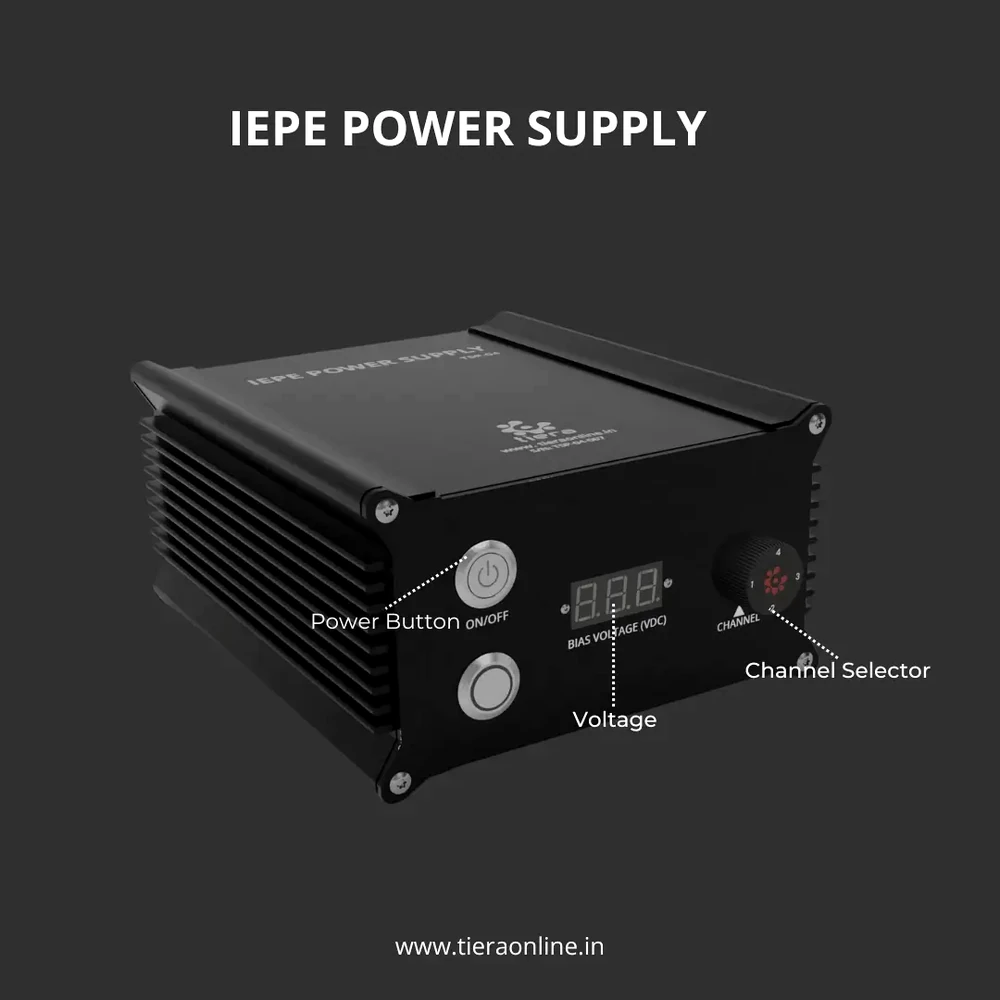
End-of-line NVH testing writes that ear down as numbers. The unit mounts on a fixed test fixture, a sensor picks up its vibration signature, a DAQ digitises it, and software compares the spectrum against a stored limit — pass if it stays under, fail if it breaks through. In the TIERA stack, that chain is an accelerometer or microphone into a PhonoVibe DAQ, judged by the NDT RAM spectral-alarm module in TVIB. Same unit, same verdict, every time — and every verdict is logged.
Why one overall number is too blunt
The tempting shortcut is a single overall vibration level with one threshold: below the line ships, above the line fails. It rarely works. A narrowband defect — a bearing tone, a gear whine, a joint click — concentrates its energy in a thin slice of the spectrum. Riding on top of normal broadband energy, it can barely move the overall number while being obvious to any trained ear.
The spectrum is where faults live at known addresses. An unbalanced rotor raises the amplitude at 1x rotation speed. A bearing defect shows up at its characteristic BPFI, BPFO and BSF frequencies with sidebands. A driveshaft with an inner joint defect produces elevated amplitude around 6x to 8x rotation frequency, depending on ball count. Judge those addresses individually and the defect has nowhere to hide.
Band and mask limits: the spectrum does the judging
- Bands are placed over the addresses that matter for that product — 1x for unbalance, the joint-defect region for a shaft, bearing frequencies for a motor.
- Each band carries its own threshold, and one band exceeded is enough to fail the unit.
- A failing unit usually looks normal everywhere except in one watched band, which is exactly why an overall number misses it.
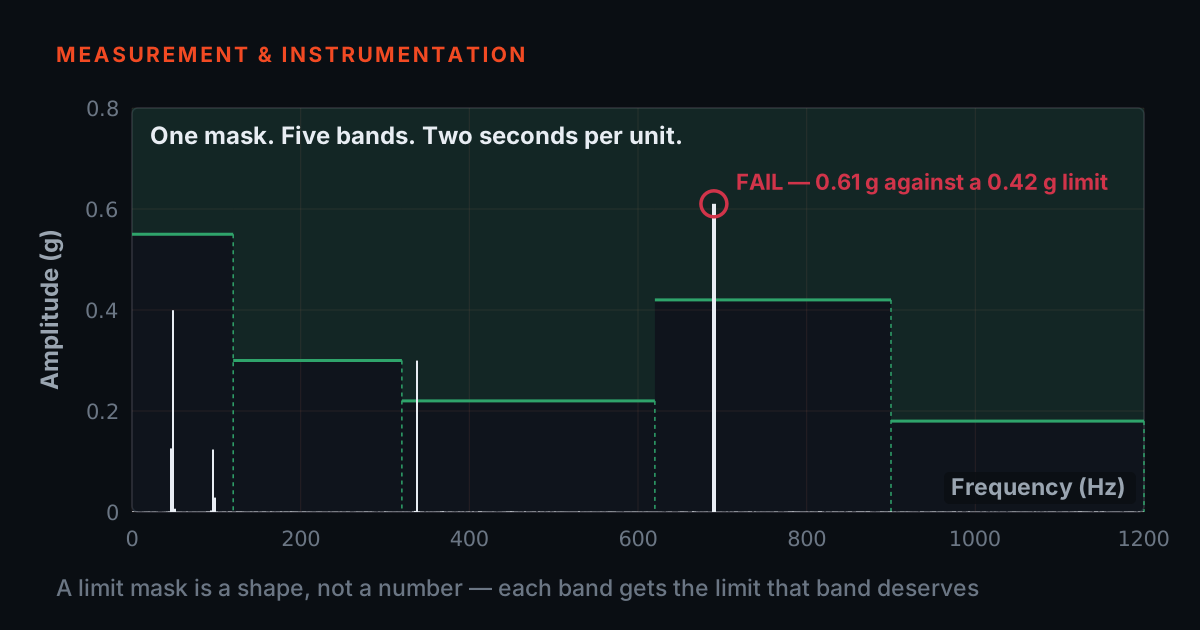
This is exactly what the NDT RAM module in TVIB does: it sets spectral alarm bands on a per-component basis. The spectrum is divided into frequency bands placed over the addresses that matter for that product — 1x for unbalance, the joint-defect region for a shaft, bearing frequencies for a motor. Each band carries its own upper threshold, and together they form a mask over the spectrum. The unit passes only if every band stays under its limit; a single band exceeded means fail. The comparison runs band by band and returns the verdict in seconds.
Watch the figure below. The known-good unit hugs the floor, comfortably under the mask everywhere. The failing unit matches it almost everywhere too — except in one watched band, where a defect tone climbs straight through the limit. That one band is the whole verdict, and the mask is the inspector's ear, written down as numbers anyone can audit.
Set the limit from a population, not a guess
- No standards body publishes a pass/fail number for a specific product's NVH signature — the limit comes from your own good units.
- A limit derived from one golden sample will fail normal product, because good units vary with tolerances, batches and assembly.
- The template is only as trustworthy as the fixture, cabling and calibration behind it.
Where do the threshold numbers come from? Not from a datasheet and not from intuition — there is no standards body that hands down a pass/fail number for a specific product's NVH signature. A common working method is to measure a sample of known-good units (often 20 to 30) on the same fixture, let the software compute the spectral envelope of that population, and then place each band's limit a deliberate margin above the population's mean level in that band — typically 3 to 6 dB, which is the reference both figures below use. Save that as the template, and every future unit is judged against what good actually looks like on this line.
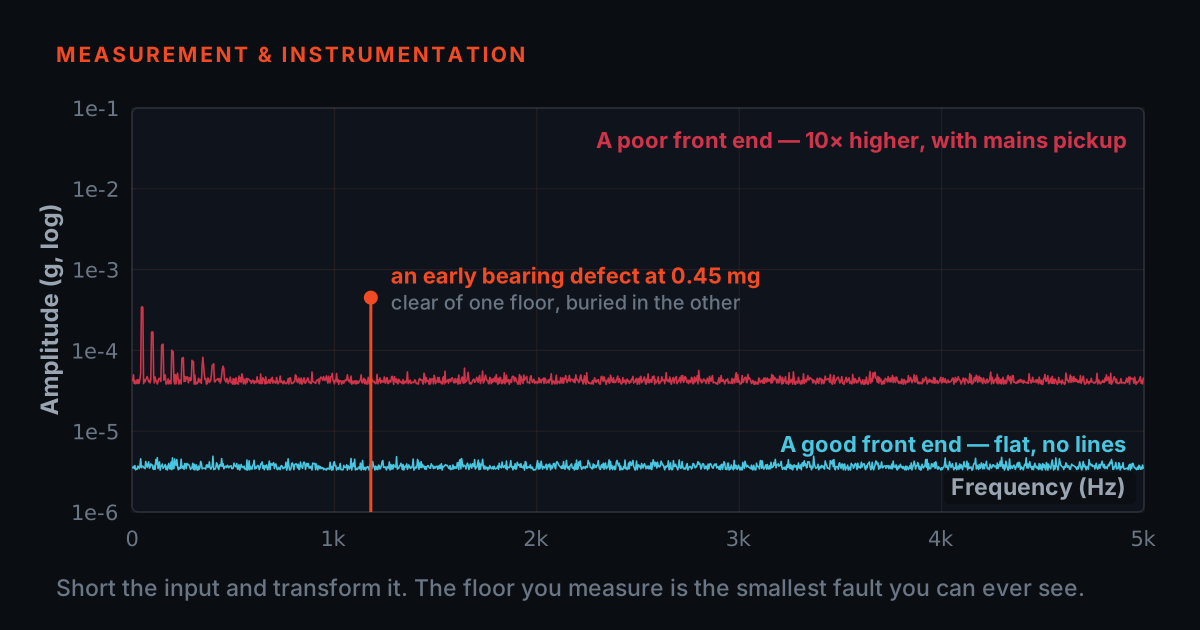
The population matters because good units vary: tolerances, batches and assembly all spread the spectrum. A limit set from one golden sample will fail normal product; a limit guessed generously will pass defects. The template is only as trustworthy as the measurement chain behind it — which is why a fixed fixture and mounting, low-noise cabling, the PhonoVibe's 24-bit resolution and its factory calibration certificate matter: they keep the measurement consistent across shifts and across test stands, so the limit means the same thing on Monday night as it did when it was set.
The limit is an economic decision
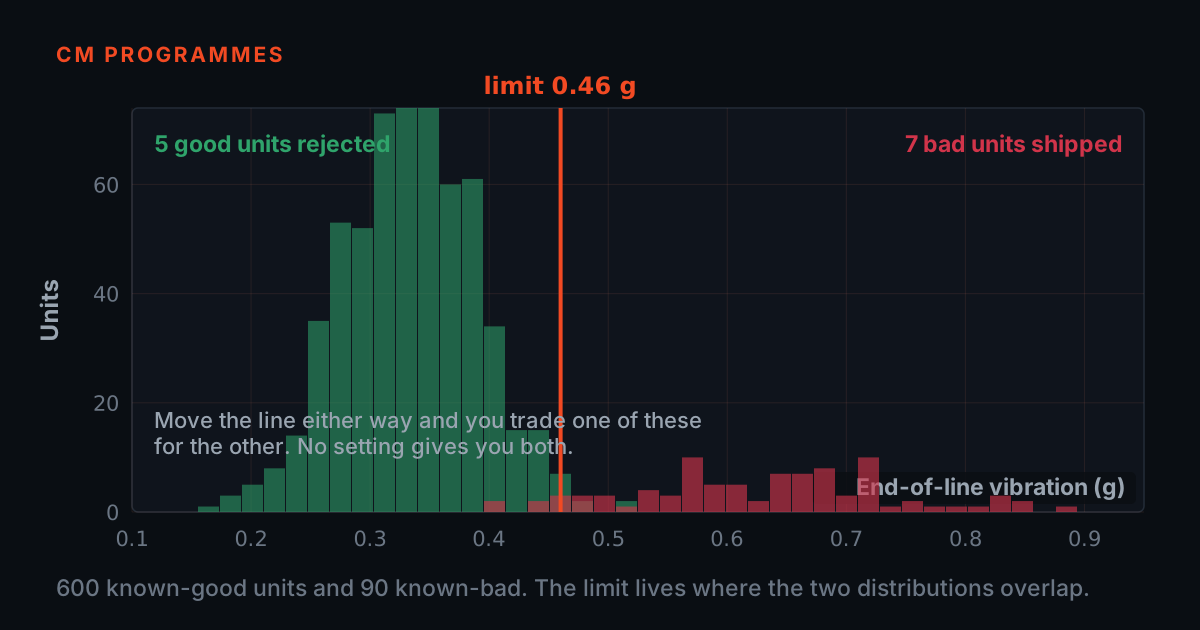
A limit can be wrong in two directions, and both cost money. Set it too loose and defective units escape: warranty claims, field failures, and the slow damage of a customer learning to distrust the product. Set it too tight and the station fails good product: scrap and rework climb, the line slows, and operators who watch known-good units fail will start to override the station — at which point the test protects nothing.
So the margin is a business dial as much as an engineering one, and it should be tuned with evidence rather than argument. This is where logged data earns its keep: when a unit fails, the full waveform and spectrum are saved automatically — the rework team sees exactly which band tripped and why, disputed false-fails can be audited instead of debated, and the template can be re-derived as the good-unit population drifts over months of production.
- Derive the limit from a population of known-good units measured on the same fixture.
- Place bands over the frequencies where this product's faults live, and give each its own threshold.
- Keep the saved waveform and spectrum for every failure so a disputed fail can be audited.
- Re-derive the template as the good-unit population drifts.
- Tune the margin against measured scrap and warranty cost.
- Do not set the limit from a single golden sample — normal product will fail against it.
- Do not judge the unit on one overall level with one threshold.
- Do not change the fixture, cabling or mounting mid-programme and keep the old template.
- Do not guess a generous margin to keep the line moving; the defects ship instead.
- Do not settle a false-fail argument by debate when the saved spectrum can settle it.
A representative line, end to end
A representative line, not a specific customer: a driveshaft station spins each shaft at a fixed test speed on a dedicated fixture, with an IEPE accelerometer on a stud mount feeding a 4-channel PhonoVibe. The NDT RAM template was built from a batch of known-good shafts, with alarm bands over 1x rotation for unbalance and over the 6x to 8x region where an inner joint defect raises the amplitude. A shaft with a joint defect trips that band before it can reach a vehicle, the verdict lands in seconds, and the saved spectrum goes to the rework bench with the shaft. The same pattern applies to electric motor QA and pump impeller inspection — only the fixture, speed and band placement change.
When a failure traces back to airborne noise rather than a mechanical defect, the fix often lives in the product's acoustic materials — and that work happens in the lab, where the T-Sonus impedance tube characterises absorption coefficient and transmission loss of liners, foams and enclosure panels from 50 Hz to 10 kHz under ISO 10534-2 and ASTM methods. If the ideas here are new, TIERA's free primers at 101.tieraonline.in — Acoustics & Noise 101 and Measurement Setup 101 — cover the theory at no cost (they are primers, not accredited certifications). For teams who need formal, assessed training, the TCAT programme on our services page runs structured courses with proctored exams at exams.tieraonline.in.
TIERA instruments that do this work.
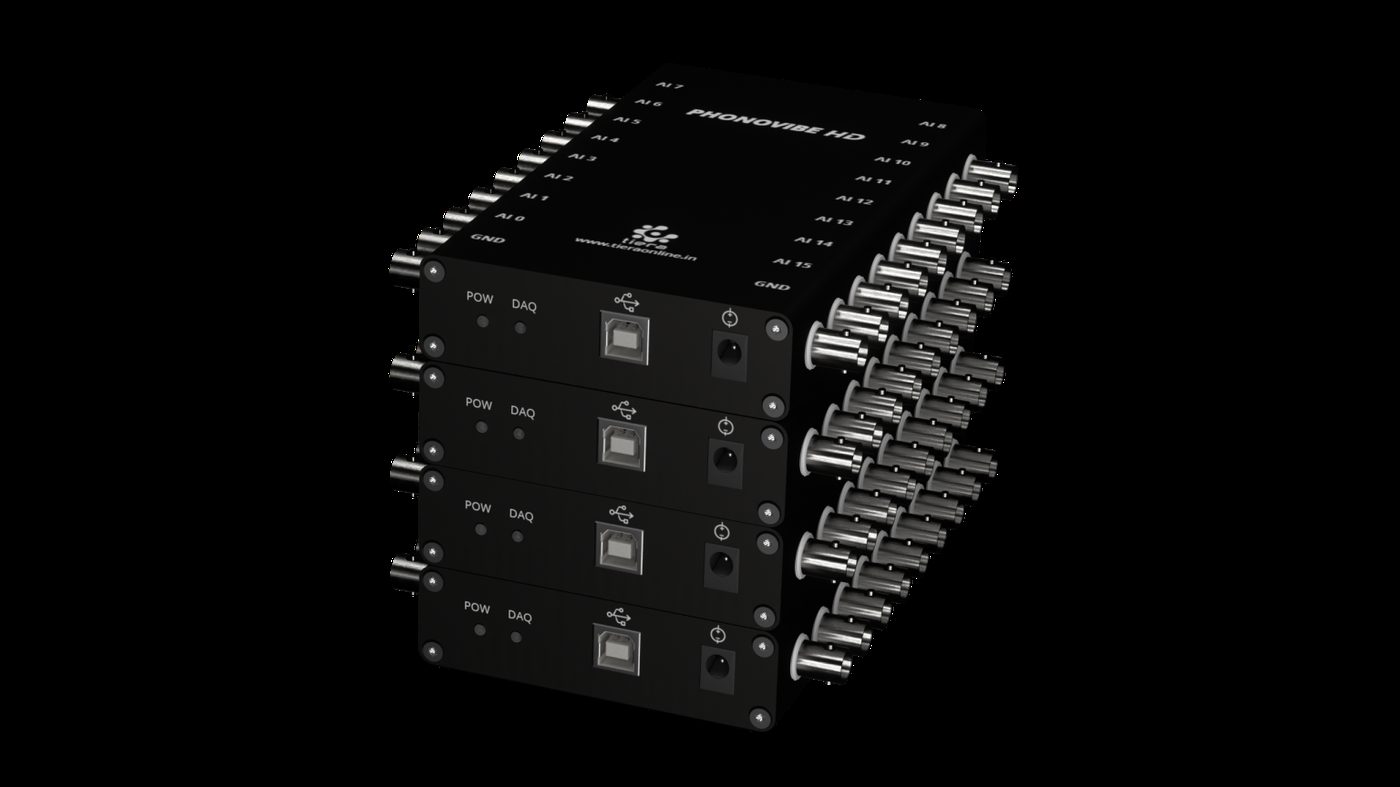
PhonoVibe Series — Sound & Vibration DAQ
The station front end — simultaneous 24-bit capture with a factory calibration certificate, so the pass/fail limit means the same thing on every shift and every test stand.
- Channels
- 2 / 4 / 8 / 16 (D / Q / O / HD)
- ADC
- 24-bit, simultaneous sampling on every input
- Sensor power
- IEPE / ICP / CCLD — 24 V, 4 mA constant current
- Calibration
- Factory calibration certificate, 1-year validity
- Connectivity
- USB plug-and-play, Windows 10 / 11
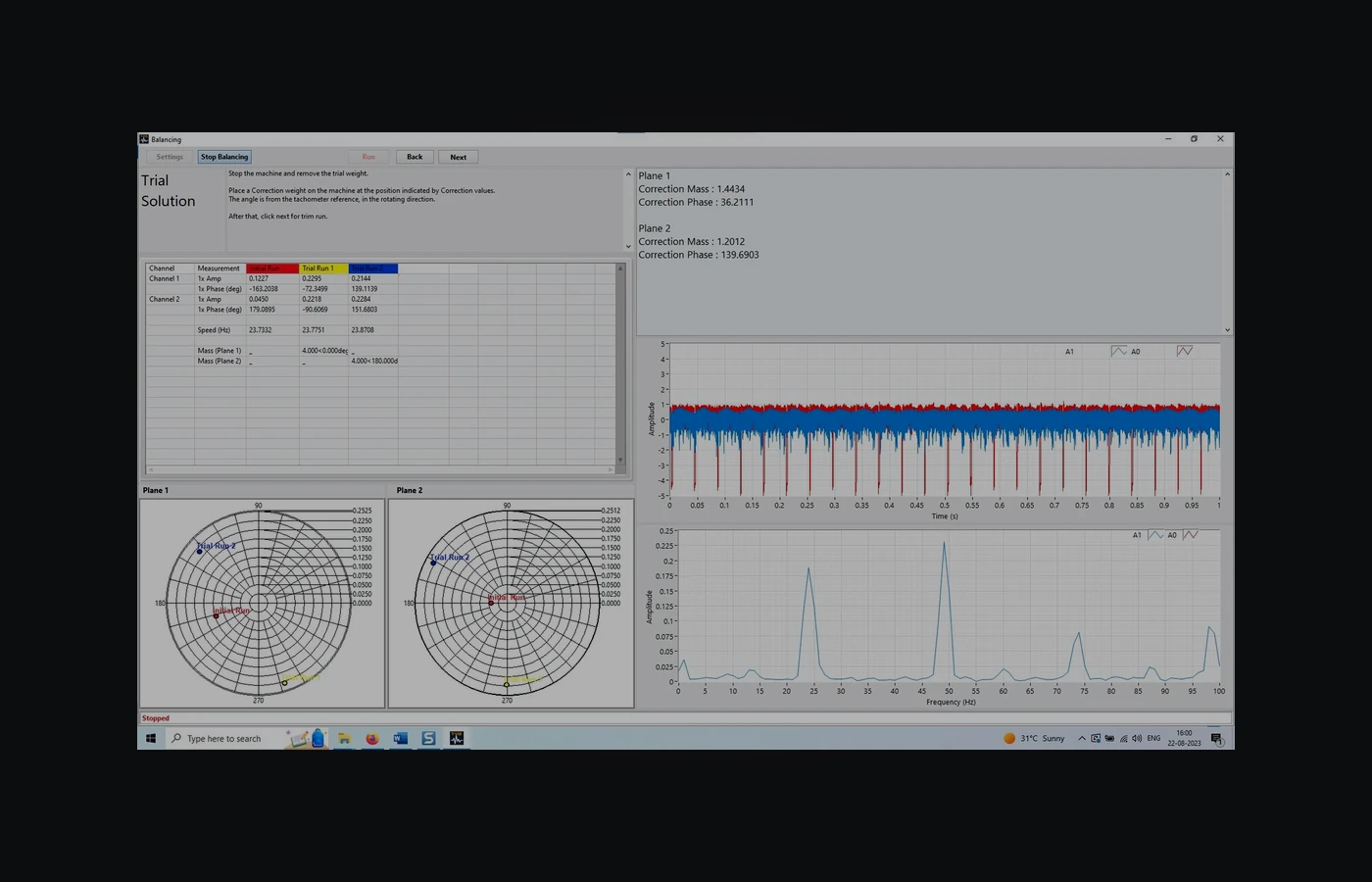
TVIB — Sound & Vibration Analysis Software
NDT RAM is the judge — spectral alarm bands built per component from a known-good population, returning pass or fail on every unit under test.
- NDT RAM module
- End-of-Line spectral alarm — automated pass/fail thresholds per component
- Proven on
- Automotive driveshaft testing, electric motor QA, pump impeller inspection
- FFT size
- Up to 102,400 points
- Base module
- TSAP201 — free with every PhonoVibe DAQ

Sensors & Accessories
A fixed, repeatable fixture chain — sensor, armored cable, solid mount, junction box — is what keeps the same limit fair to every unit that crosses the station.
- Accelerometers
- TACPB-10T3 MEMS IEPE plus industrial, compact and low-frequency variants
- Cables
- Armored SS outer (CA-103) for installations near moving machinery — 5 m standard
- Mounting
- SS304 triaxial block for permanent installations; magnetic mount for walk-around checks
- Routing
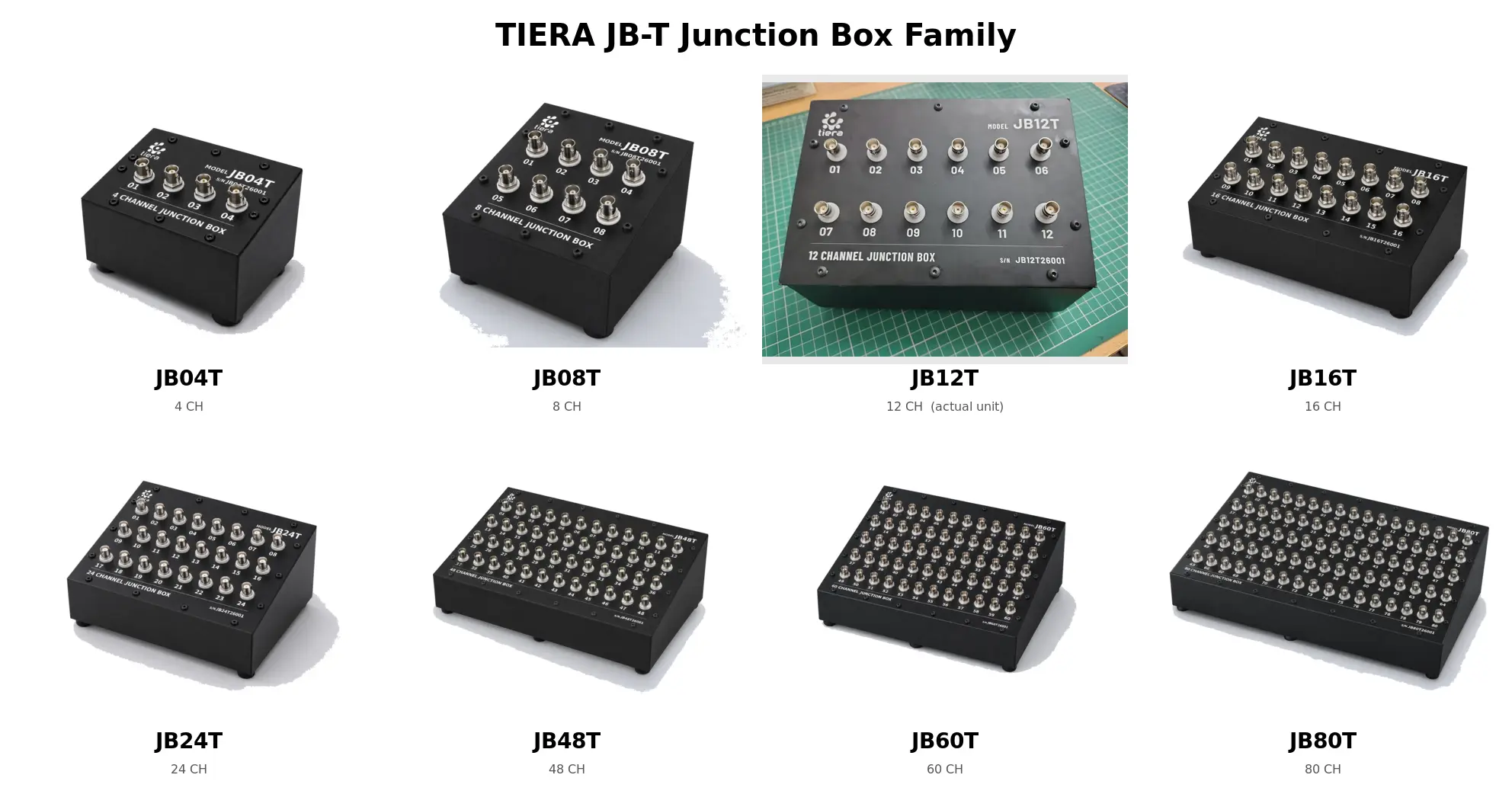
- Vibration junction boxes for clean multi-point cable routing
From the TIERA store
The kit for this job
What we would actually put in front of someone doing the measurement this post describes — not the whole catalogue.
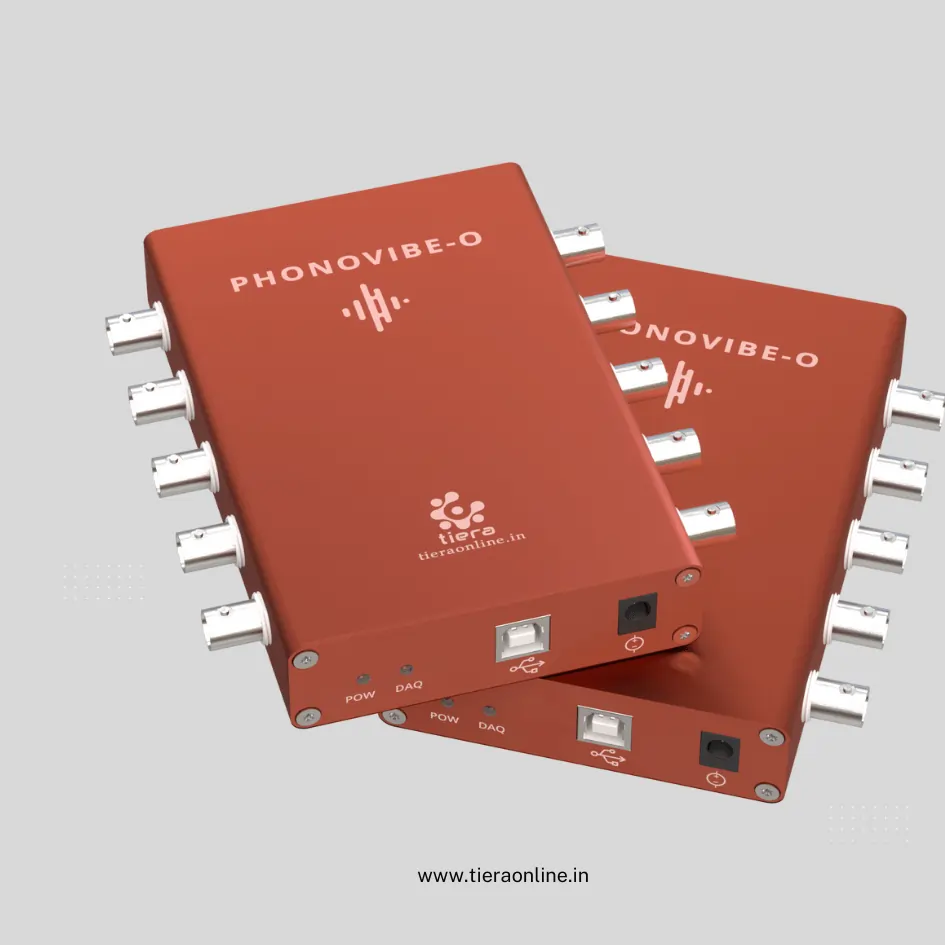 Phonovibe O- 8 Channel IEPE Data Acquisition SystemEight Channels Standard plug & play USB Powered Take data from accelerometers, microphones, hammers, or any other IEPE Sensors T- VIB Software to acquire time waveforms, frequency spectra, overall vibration levels, FRF’s and octave measurements ** Windows 10 or above Operating System ** T-VIB Software base version comes with Time and Spectrum with Post processor TSAP 201. Check out TVIB Software regarding more module options.₹4,60,800View →
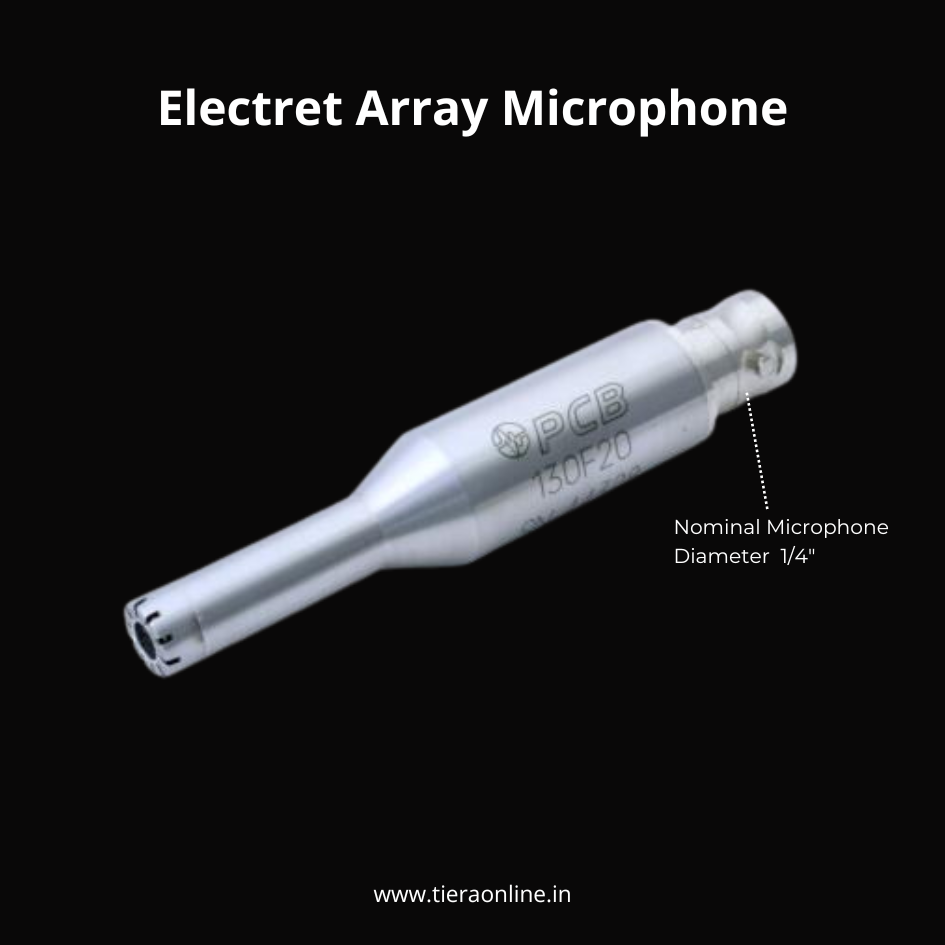 130F20 ICP® Electret Array MicrophoneICP® Array Microphone with integral preamplifier, BNC jack connector, TEDS Nominal Microphone Diameter: 1/4″ Sensitivity: 45 mV/Pa Inherent Noise: 29 dB re 20 µPa₹57,600View →
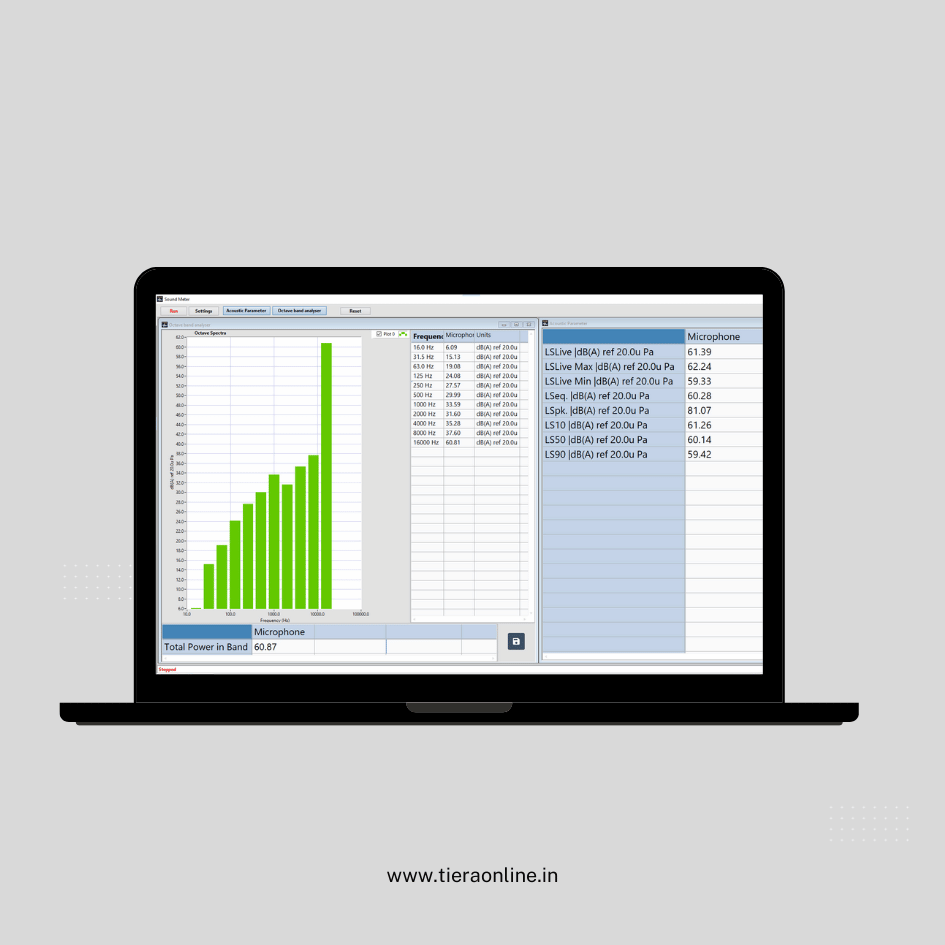 TSLM 204 – Sound level meter (Phonovibe O)Use Cases Off route Machine Noise analysis Environmental noise₹38,880View →
Use cases
Where this shows up in the field
Put a repeatable pass/fail station on your line — and set its limits from your own good units
The station described above is a stock TIERA configuration, not a custom build. A PhonoVibe DAQ is the front end — 24-bit, simultaneous sampling, IEPE/ICP/CCLD sensor power, and a factory calibration certificate so the limit means the same thing on every shift and every test stand. TVIB's NDT RAM module does the judging: measure 20–30 known-good units on your fixture, let it compute the spectral envelope, place your band limits above it, save the template. From then on every unit gets a band-by-band verdict in seconds, with the waveform and spectrum logged on every fail.
If you'd rather not work out fixtures, band placement and margins alone, TIERA runs on-site engineering visits — we can measure your good-unit population with you and help commission the template on your line. And to be clear about one thing: T-Sonus, our impedance tube, is a lab instrument for characterising acoustic materials — absorption and transmission loss of the liners and panels you reach for when a failure traces to airborne noise. It belongs next to the line's problems, not on the line itself.
- PhonoVibe D/Q/O/HD — 24-bit USB DAQ with simultaneous sampling, IEPE sensor power and a factory calibration certificate (1-year validity), so measurements stay consistent across shifts and stands
- TVIB NDT RAM — per-component spectral alarm bands built from a known-good population; pass/fail in seconds, full waveform and spectrum saved as evidence for the rework bench
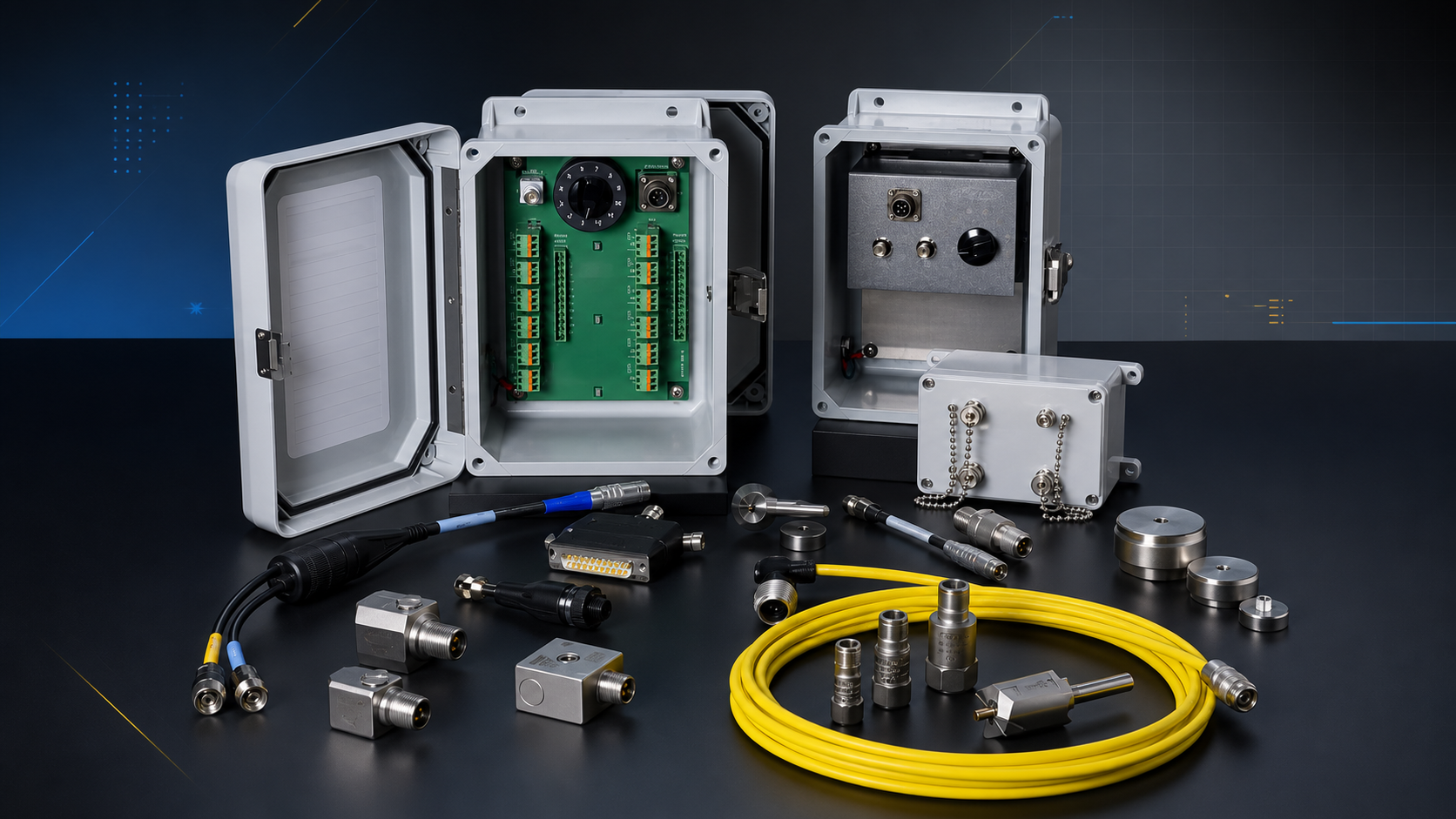
- Sensors & accessories — IEPE accelerometers, low-noise and armored cables, mounting blocks and junction boxes for a fixed, repeatable fixture chain
- T-Sonus impedance tube — lab characterisation of absorption coefficient and transmission loss (ISO 10534-2, ASTM E1050/E2611, 50 Hz–10 kHz) when the fix is in the product's acoustic materials
Where this sits on the TIERA learning ladder.
The theory behind this article is covered free, in full, by the TIERA 101 primers: Acoustics & Noise 101, Measurement Setup 101. They are self-paced, interactive, and end in an exam and a certificate.
TCAT adds structured, assessed training on measurement practice and limit-based testing, with proctored exams at exams.tieraonline.in — see the services page to enrol.
TIERA 101 is a free introductory primer, not an accredited ISO certification, and its hours do not count towards the formal training ISO 18436 requires.