

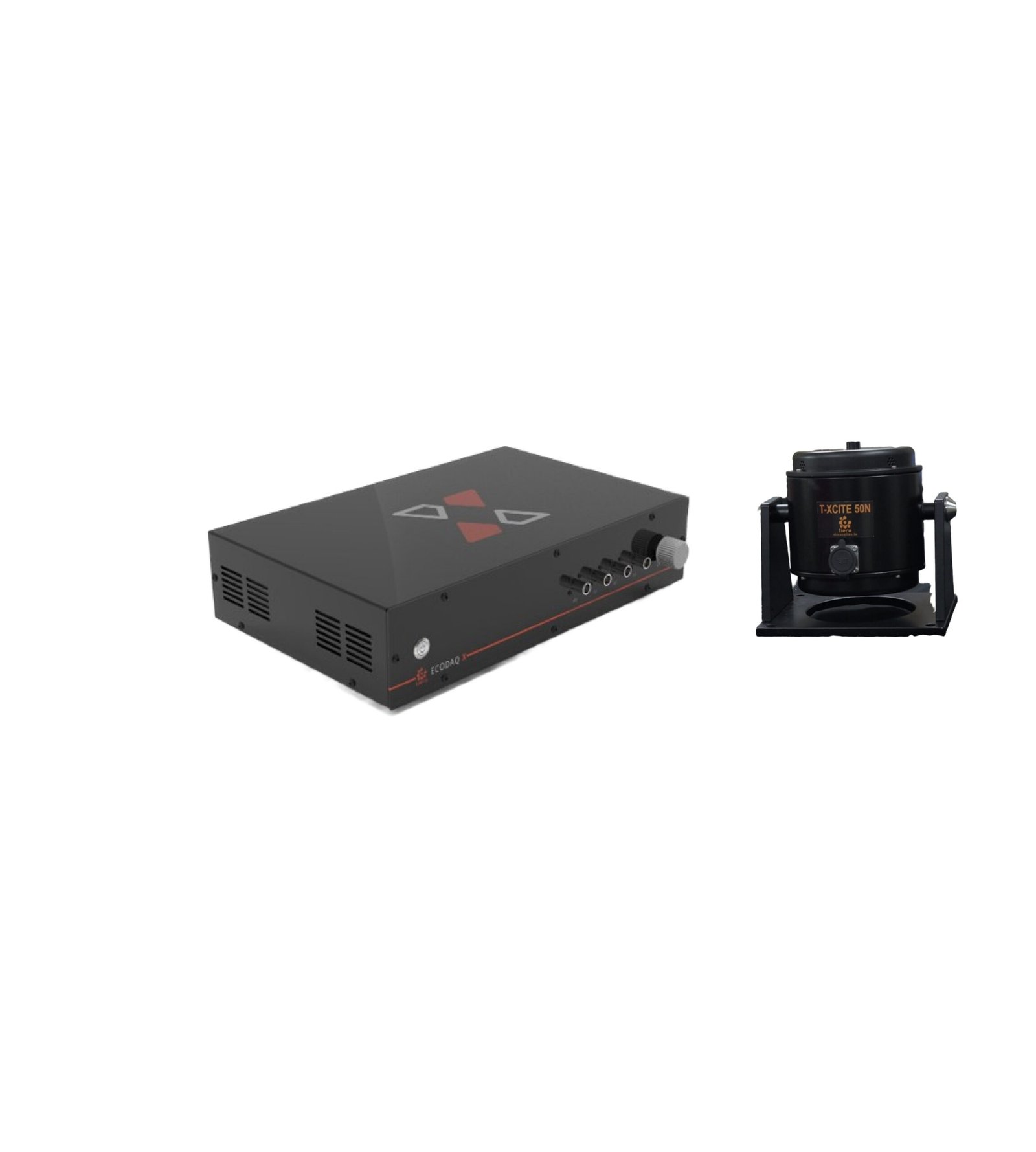
TXcite 50 – Electrodynamic Shaker (50 N) with Amplifier
Indicative price, ex-works. Excludes GST, packing & forwarding, freight, insurance and duties. Request a quotation to confirm.
T-Xcite Permanent magnet modal shakers provide precise, reliable, stable and long-lasting operation. Highest quality materials, stringent quality control and rugged construction General mechanical mobility measurements Experimental modal analysis on most mechanical structures SISO, MISO. SIMO and MIMO modal test applications Advanced structural dynamics investigations Structural damage detection Finite element model correlation
T-Xcite Permanent magnet modal shakers provide precise, reliable, stable and long-lasting operation. Read more
Highest quality materials, stringent quality control and rugged construction General mechanical mobility measurements Experimental modal analysis on most mechanical structures SISO, MISO. SIMO and MIMO modal test applications Advanced structural dynamics investigations Structural damage detection Finite element model correlationDescription
Read full description
TXcite 50 Modal Shakers are designed for demanding modal testing applications; these permanent magnet modal shakers provide precise, reliable, stable, and long-lasting operation. Highest quality materials, stringent quality control and rugged construction assure a versatile means of modal excitation for any experimental modal test using the attached excitation method. Based upon years of practical modal test experiences, the line of Modal shakers, all exhibiting high force-to-weight ratio, has been specifically developed to help ensure the best possible modal test performance with minimum setup time.
Indicative price, ex-works. Excludes GST, packing & forwarding, freight, insurance and duties. Request a quotation to confirm.
Request a quote
Send this straight to our sales team — pricing, lead time, accessories, or a demo.
Before you buy
The engineering behind this product
Why this measurement is made, how it goes wrong, and what the numbers mean — written by the people who build the instrument.
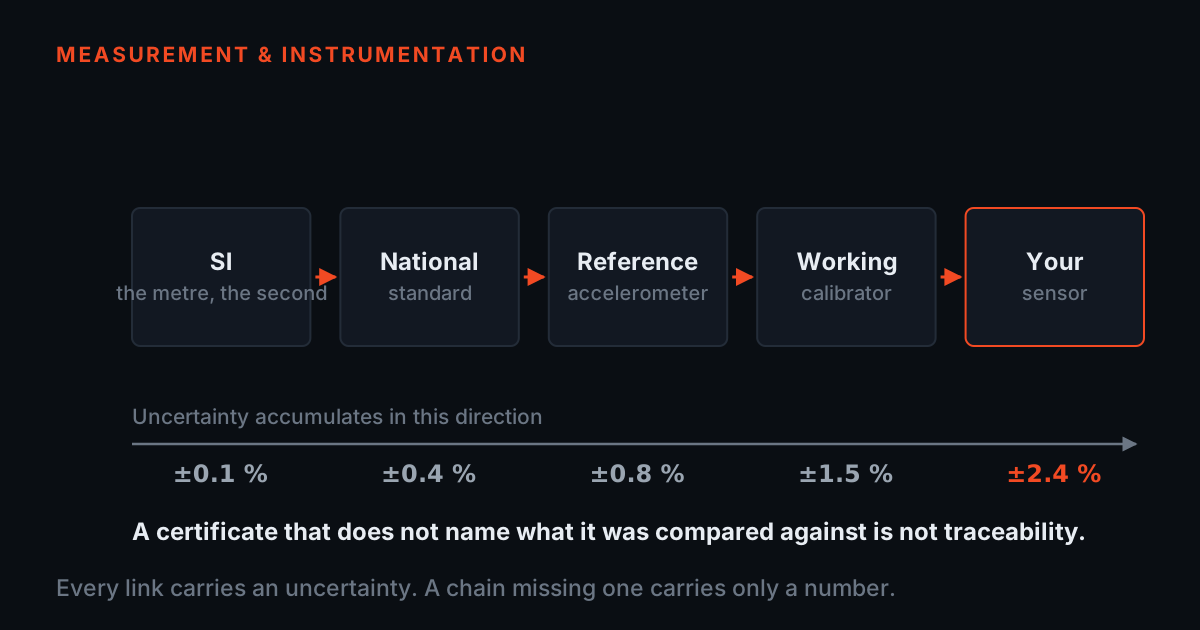 Measurement trustWhat Makes a Vibration Reading Trustworthy4.2 mm/s is not a fact — it is a voltage divided by an assumed sensitivity. A short visual tour of sensitivity, drift, damage, and what back-to-back calibration against a reference actually proves.6 min read · Read →
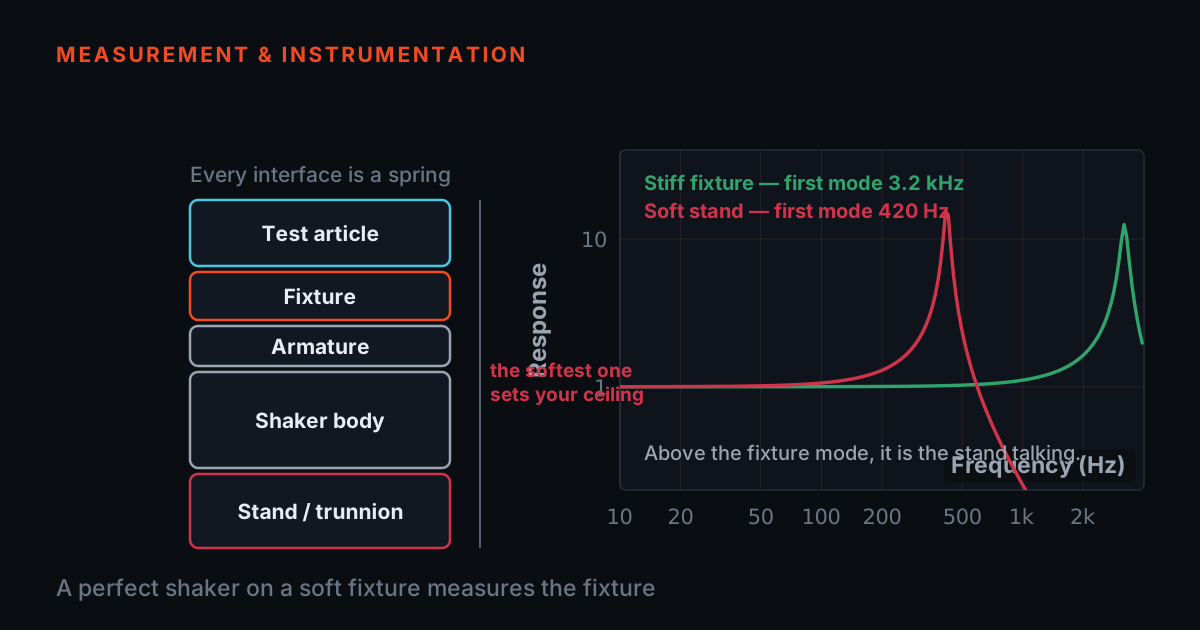 ExcitationShaker Testing: What the Stand Does, and Why a Good Shaker on a Bad Fixture Measures the FixtureAn electrodynamic shaker gives you controlled excitation — a known force, at a known frequency, repeatably. What decides whether the result means anything is the thing underneath it: the stand, the fixture and the boundary condition. Most disappointing shaker data is a fixture resonance wearing a costume.8 min read · Read →
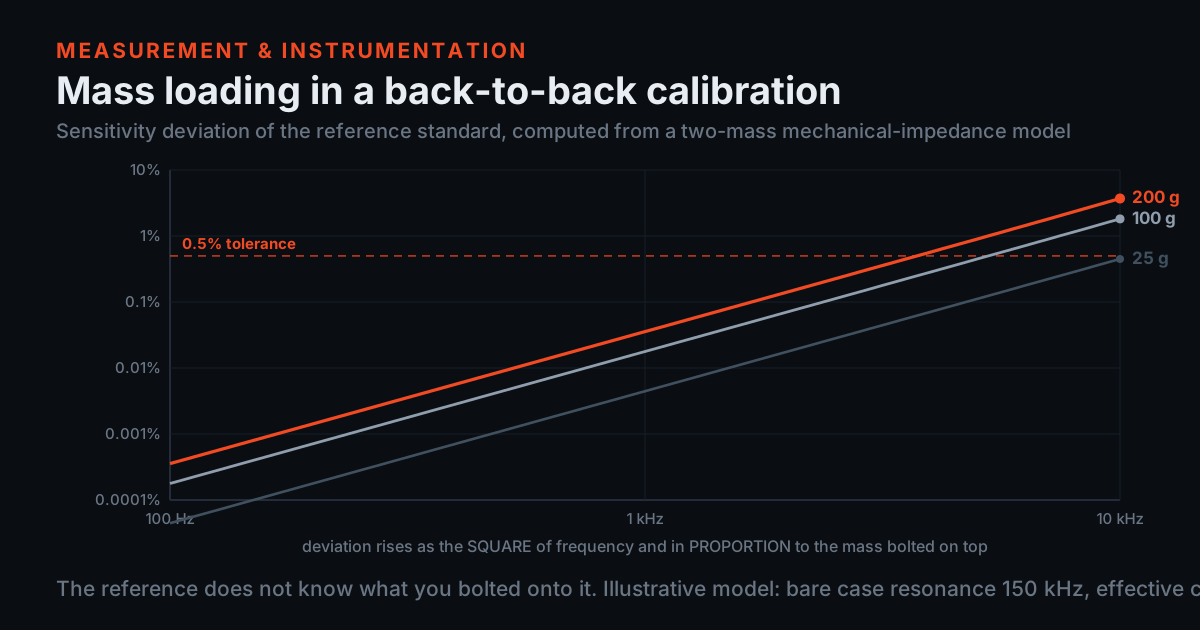 Primary standardsWhere the Calibration Chain Actually BeginsA comparison transfers a sensitivity; it never creates one. This is the layer beneath the traceability chain: absolute (reciprocity) calibration, which needs no reference sensor at all, and the mass-loading error that quietly biases every back-to-back comparison built on top of it. Drive the model and find the UUT mass your own tolerance can afford.14 min + hands-on · Read →