
Which PhonoVibe do you need?
The range is one instrument in four sizes. What separates them is channel count, sample rate and bandwidth — and the measurement you have to make usually decides it for you.
Start from the measurement
Route measurement, bump testing, single-point survey
One sensor plus a tachometer reference is all a walk-around route or a bump test needs.
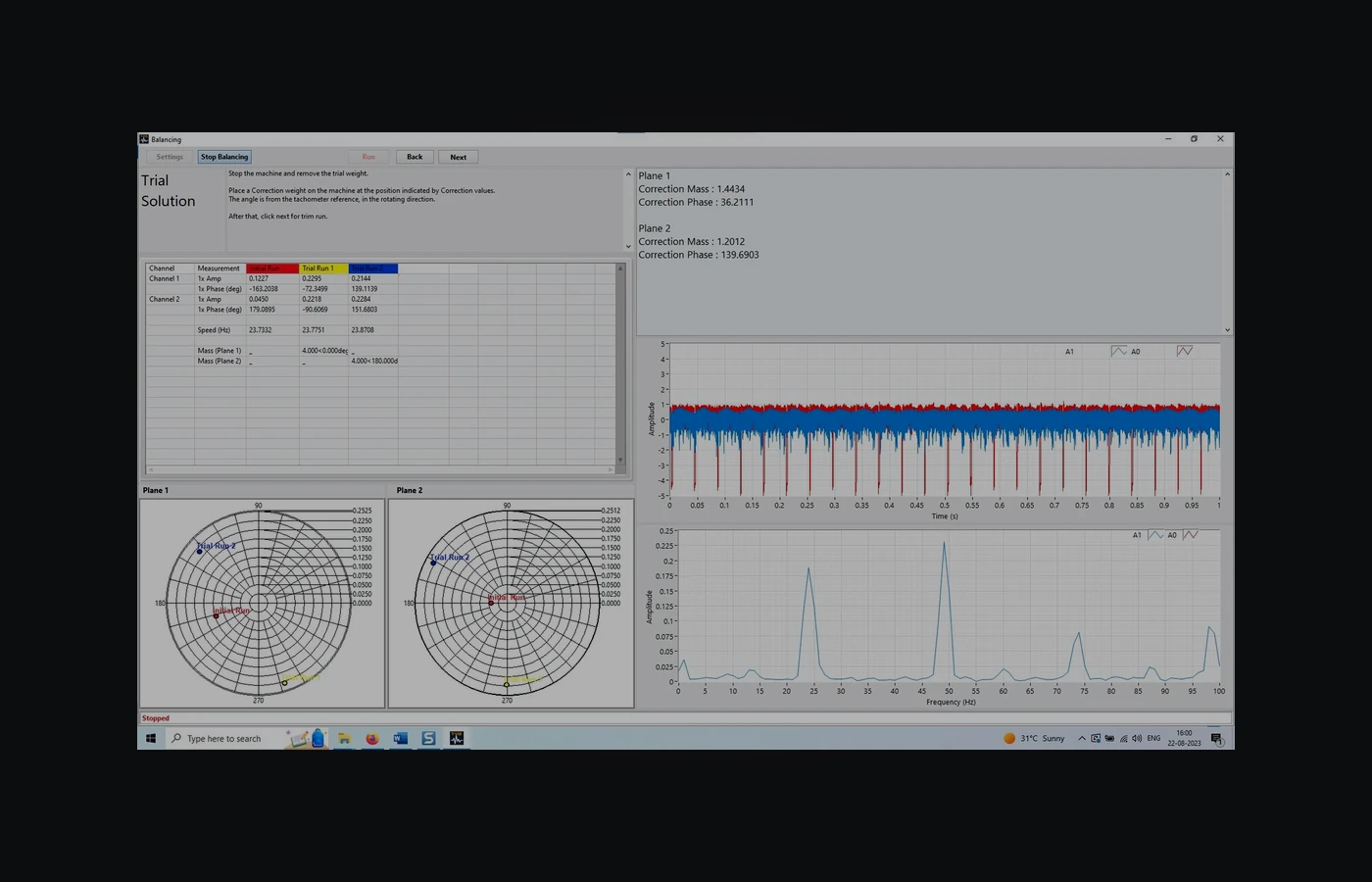
Two-plane balancing, FRF, driveline and NVH work
Two-plane balancing needs two response channels plus a reference; FRF needs force and response together.
Multi-point survey, small modal tests, end-of-line rigs
Enough simultaneous channels to capture a small structure in one shot instead of roving and re-referencing.
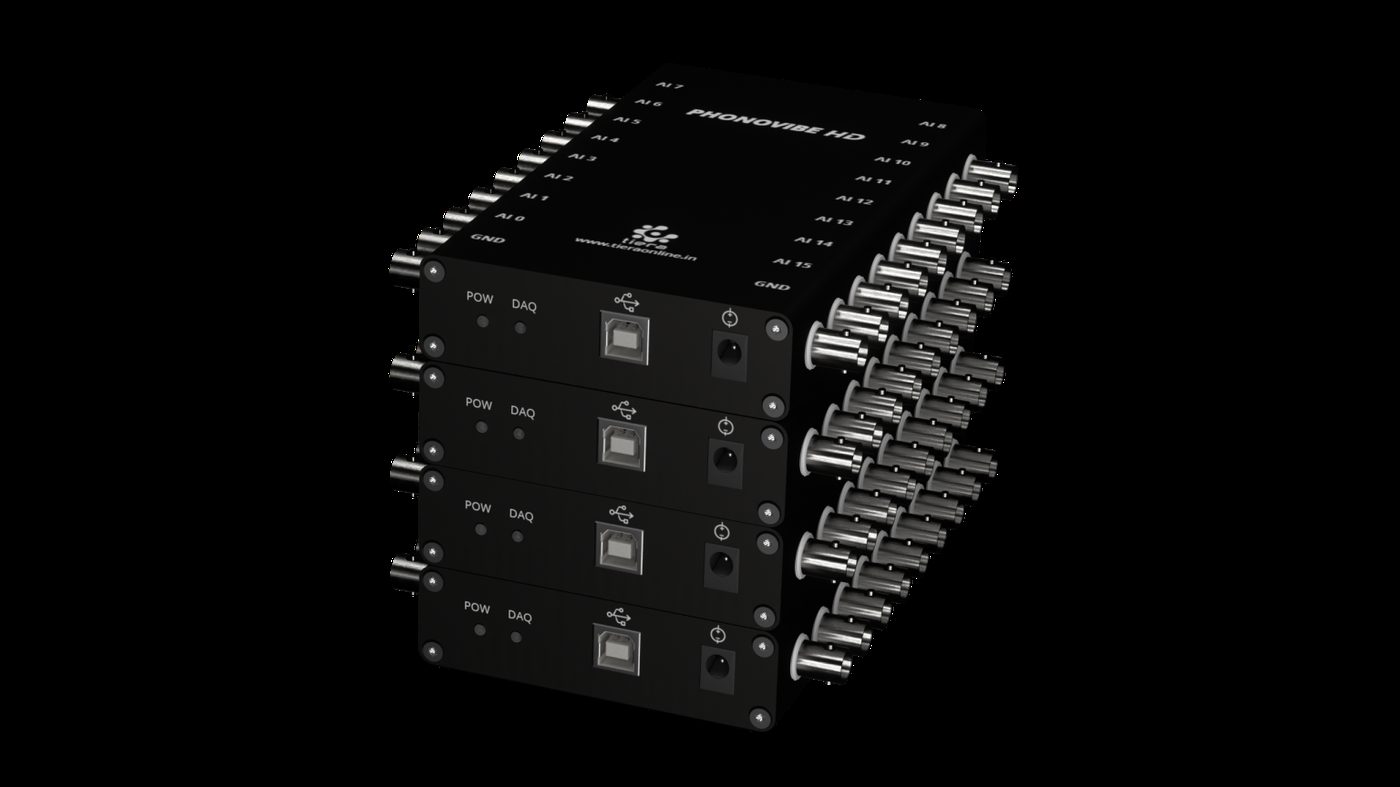
Modal analysis, structural dynamics, large arrays
The flagship — a full array captured simultaneously, which is what a clean mode shape depends on.
Side by side
| Model | Channels | Sample rate | Bandwidth | Input | Indicative |
|---|---|---|---|---|---|
| PhonoVibe D | 2 | 48 kHz | 2 Hz – 20 kHz | ±10 V input | ₹1,36,080 |
| PhonoVibe Q | 4 | 128 kHz | 0.5 Hz – 60 kHz | ±5 V input | ₹2,88,000 |
| PhonoVibe O | 8 | 128 kHz | 0.5 Hz – 60 kHz | ±5 V input | ₹4,60,800 |
| PhonoVibe HD flagship | 16 | 128 kHz | 0.5 Hz – 60 kHz | ±5 V input | ₹7,20,000 |
| PhonoVibe Eco X 4-ch DAQ + 20 N shaker — integrated bench | 4 | — | — | — | $1,500 |
Indicative price, ex-works. Excludes GST, packing & forwarding, freight, insurance and duties. Request a quotation to confirm.
Identical across the range
These do not vary by model, so they are not reasons to choose one over another.
Still deciding?
Tell us the machine and the measurement — channel count usually falls out of the answer.
Questions about choosing a model
- What is the real difference between PhonoVibe D and the rest?
- D samples at 48 kHz over 2 Hz – 20 kHz with a ±10 V input; Q, O and HD sample at 128 kHz over 0.5 Hz – 60 kHz with a ±5 V input. So D is not simply "fewer channels" — the wider bandwidth on the larger units matters for bearing and gear work at the top end, and their lower corner matters for slow-speed machines.
- Can I start with 2 channels and add more later?
- The channel count is fixed per unit, so a second unit is the way to add channels rather than an upgrade. If there is any prospect of two-plane balancing or FRF work, the 4-channel Q is usually the cheaper decision over the life of the instrument.
- Do all four use the same sensors and software?
- Yes. Every model is 24-bit, supplies 24 V, 4 mA constant current (IEPE/ICP/CCLD), reads TEDS, and ships with the TVIB TSAP201 base module. A sensor bought for one works on any of them.
- What is PhonoVibe Eco X?
- A 4-channel unit bundled with a 20 N shaker as one bench — built for teaching labs, where the exciter and the DAQ are bought together and used in the same experiment.
- What do they cost?
- PhonoVibe D ₹1,36,080, PhonoVibe Q ₹2,88,000, PhonoVibe O ₹4,60,800, PhonoVibe HD ₹7,20,000. Indicative and ex-works, excluding GST — the binding figure is the quotation.