Work Out What Your Bearing Will Sound Like Before It Fails
Four numbers — Z, d, D and the contact angle — fix the exact rhythm every bearing surface will drum out when it spalls. Derive BPFO, BPFI, BSF and FTF from the standard formulae, see why none of them is a whole number, and dial in your own geometry on the live calculator.
A failure you can predict from a datasheet
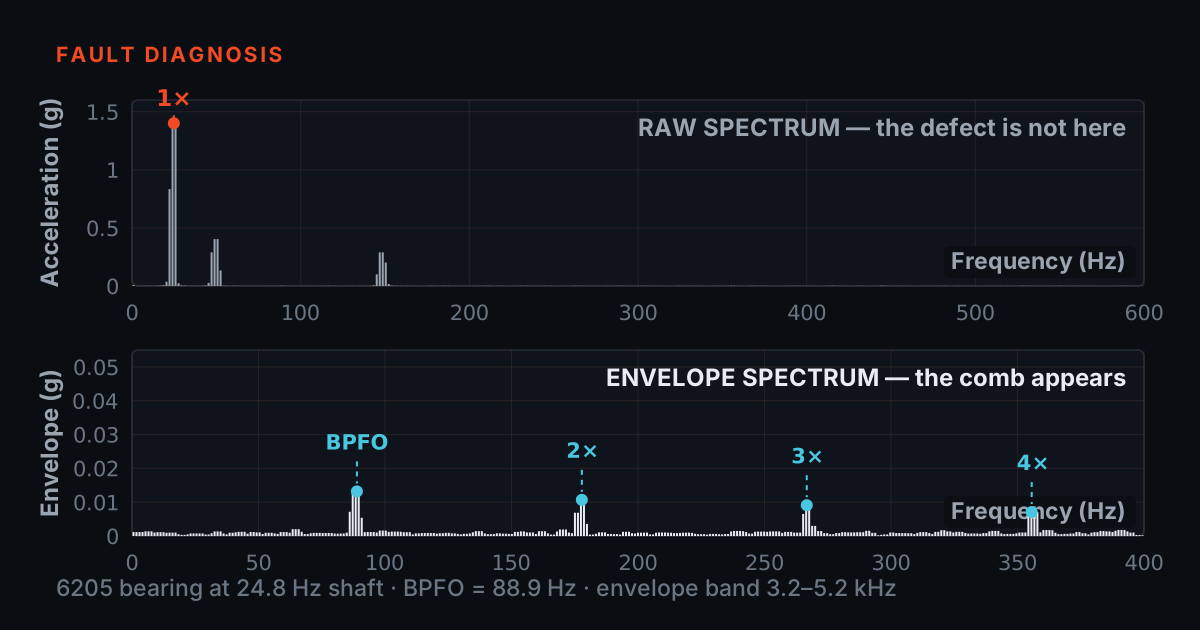
Most machine faults announce themselves only after they happen. A rolling-element bearing is the strange exception: months before a defect exists, you can already write down the exact rhythm it will drum out when it does. The reason is that a bearing is a tiny gearbox with no teeth — inner race, outer race, a train of rolling elements and the cage that spaces them, all rolling on each other at speed ratios fixed entirely by geometry. Put a spall on any one of those surfaces and it gets struck at a repetition rate the geometry decided the day the bearing was made.
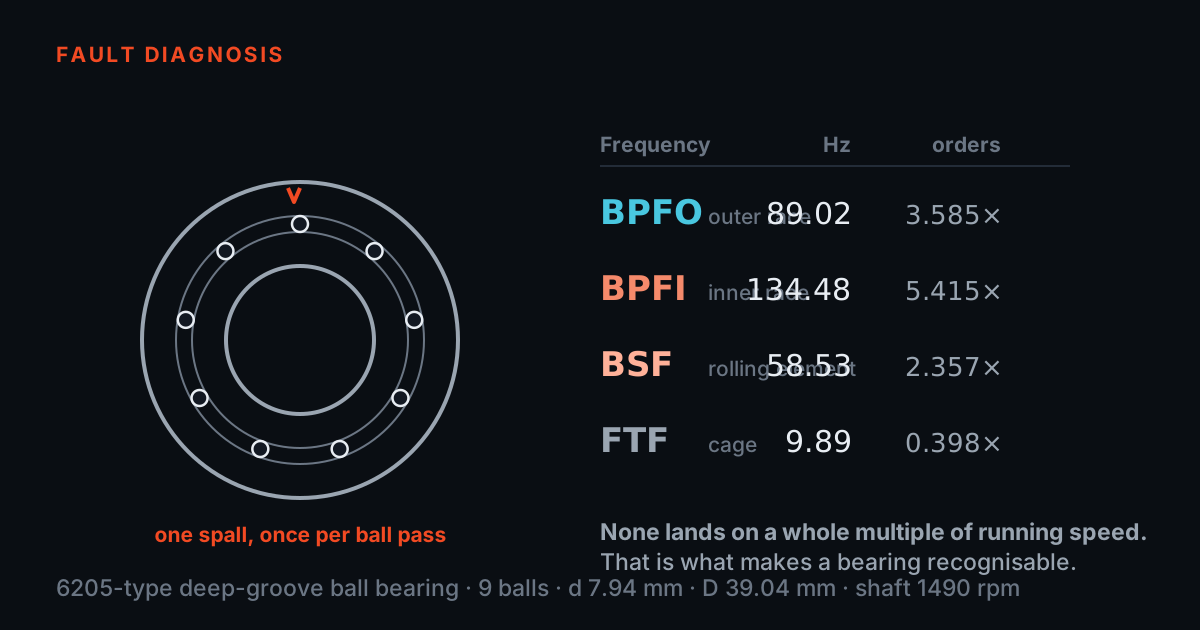
That is why analysts talk about four famous frequencies: BPFO for a defect on the outer race, BPFI for the inner race, BSF for a damaged rolling element, and FTF for the cage itself. Know your bearing's geometry and shaft speed, and you can predict all four before the first measurement — then go looking for exactly those lines in the spectrum. This post derives them, shows why they are never neat multiples of running speed, and gives you a live calculator to try your own numbers.
Four surfaces, four formulae
- Everything derives from the cage: FTF = (fr/2)·(1 − (d/D)·cosθ), and the outer-race rate is simply Z × FTF.
- Four geometry numbers and a shaft speed fix all four frequencies. None of them needs a measurement to predict — which is why you can write them on the route sheet before the first reading.
Only four parameters matter: Z, the number of rolling elements; d, the rolling-element diameter; D, the pitch diameter (the circle through the ball centres); and θ, the contact angle between the load line and the radial plane — 0° for a deep-groove bearing, larger for angular-contact types. Everything scales with shaft speed fr, so the formulae are usually written in Hz with fr = RPM/60. The cage turns at FTF = (fr/2)·(1 − (d/D)·cosθ). Each of the Z elements passes a fixed point on the outer race once per cage turn, so BPFO = Z·FTF. The inner race spins past the ball train the other way, giving BPFI = (Z·fr/2)·(1 + (d/D)·cosθ). And each ball spins on its own axis at BSF = (fr·D/2d)·(1 − ((d/D)·cosθ)²).
Two sanity checks fall straight out of the algebra and are worth memorising. First, BPFO + BPFI = Z × fr, always — if your two ball-pass numbers do not sum to the element count times running speed, something is wrong. Second, a damaged rolling element strikes both races on each rotation, so ball defects usually show at 2×BSF rather than BSF itself. These checks catch typos faster than any lookup table.
Why the rates are never whole numbers
- The cage runs at a weighted average of the two surface speeds it touches, weighted by (d/D)·cosθ — close to half shaft speed, never exactly half.
- Every defect rate inherits that awkward ratio, and that is the diagnostic gift: shaft-driven energy lives at integer orders, so a confident peak at 3.57 orders can only be a bearing.
The cage is the key. With the outer race fixed and no slip, each rolling element's centre moves at the average of the two surface speeds it touches — the moving inner race on one side, the stationary outer race on the other. But it is a weighted average, and the weighting is the geometry term (d/D)·cosθ: the fatter the ball relative to the pitch circle, the further the cage falls below half shaft speed. For a typical geometry that lands the cage at something like 0.397× running speed — close to a half, never exactly a half, and never a tidy fraction.
Every defect frequency inherits that awkward ratio, because each one is just the cage rate multiplied up by the element count or reflected through the inner race. This is a diagnostic gift. Unbalance, misalignment, looseness and blade pass all live at integer orders — 1×, 2×, 3× running speed. A confident peak at 3.57 orders can only be a bearing, and if 3.57 matches the BPFO you predicted for the drive-end bearing, you know which component and which surface before anyone touches a spanner.
Hz or orders? Use both
- Orders do not move when the speed does, so orders are what you memorise per machine and Hz is what you put the cursor on at today's speed.
- The same 6205-style geometry reads 88.1 Hz at 1480 RPM and 3.57 orders at every speed. Only one of those two numbers is worth writing down.
The same frequency wears two units. In Hz it is what your analyser actually displays: a 6205-style geometry at 1480 RPM (fr = 24.67 Hz) puts BPFO at about 88.1 Hz, BPFI at 133.9 Hz, BSF at 57.3 Hz and FTF at 9.8 Hz. But those Hz values move every time the speed changes, which makes them useless for pattern memory. Divide by running speed and you get orders — 3.57, 5.43, 2.32 and 0.40 for that same geometry — and those numbers never move. Speed the machine up, slow it down, the comb slides along the Hz axis but stays nailed to the same orders.
So the working habit is: think in orders, verify in Hz. Orders tell you what kind of line you are looking at — integer means shaft-driven, a fraction like 3.57 means bearing. Hz tells you where to put the cursor on today's measurement at today's speed. The calculator below shows both side by side for exactly this reason.
Try it: dial in your bearing
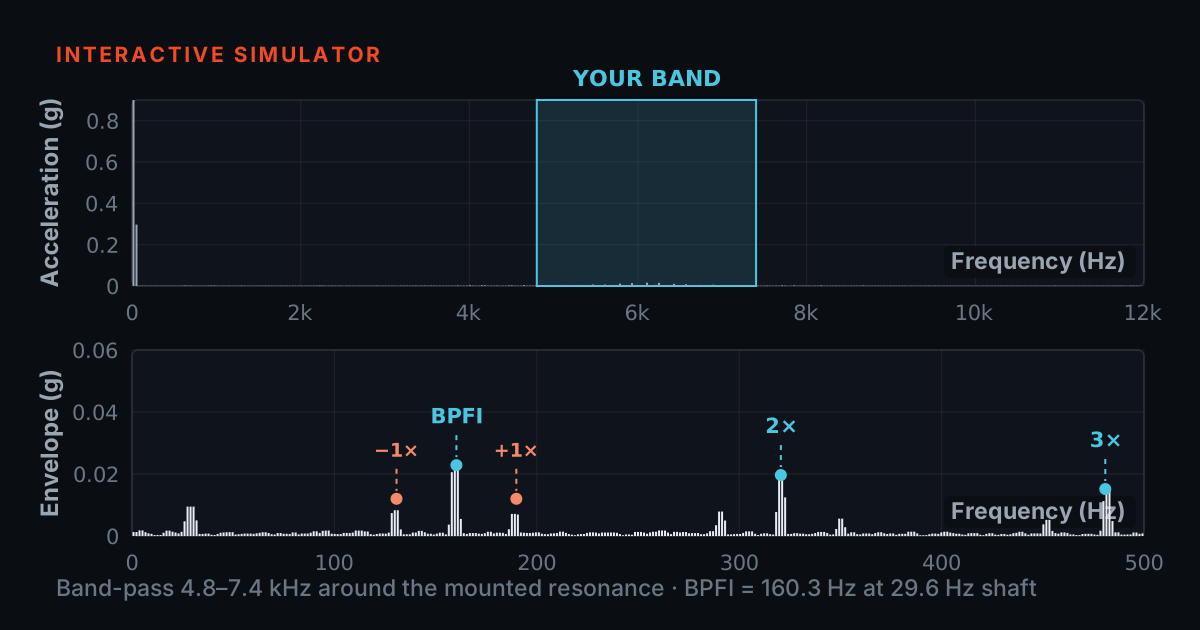
The calculator below runs the four no-slip formulae live. Set shaft speed and the four geometry numbers, and it computes FTF, BSF, BPFO and BPFI in Hz and in orders, then draws the predicted comb on an order axis — grey peaks at the integer orders where shaft-driven energy lives, coloured lines where the bearing rates fall between them. The 2×BSF line is drawn too, since a damaged rolling element strikes both races per rotation, and the BPFI fundamental carries ±1-order sidebands because an inner-race defect rides in and out of the load zone once per revolution.
The presets are example geometries for illustration — a deep-groove set in the 6205 style and a steeper angular-contact set — not manufacturer's data. For a real programme, take Z, d, D and θ from the manufacturer's datasheet or a bearing database rather than measuring by hand: these formulae assume pure rolling, and real bearings slip a little under load, so measured rates typically sit a percent or two below the kinematic prediction. Treat the calculator as a search window, not a verdict.
Example geometries for illustration only — not manufacturer’s data. Enter your own bearing’s numbers from its datasheet.
—
| Defect frequency | Hz | Orders (× shaft) |
|---|---|---|
| FTF — cage | — | — |
| BSF — ball spin | — | — |
| 2×BSF — ball strikes both races | — | — |
| BPFO — outer race | — | — |
| BPFI — inner race | — | — |
No-slip kinematic formulae. Real bearings slip slightly under load, so measured rates usually sit a little below these values — take production numbers from the manufacturer’s data or a bearing database.
From prediction to practice
A representative example, not a specific customer: a maintenance team inherits a fan with no bearing records beyond the number on the housing. From the bearing database they pull Z, d, D and θ, run the formulae at the fan's 1480 RPM, and write four Hz values on the route sheet before the first measurement. The next reading shows a small comb whose spacing sits about one percent below the predicted outer-race rate — exactly the shortfall slip produces — and the peak trends upward over the following months. Because the number was predicted in advance, nobody debates what the line is; the argument is only about when to schedule the replacement, which is the argument you want to be having.
The habit generalises. Compute the expected rates for every monitored bearing once, store them with the measurement point, and every future spectrum arrives pre-annotated with where trouble would show. If you want the full theory behind these four formulae — including slip, load-zone modulation and envelope analysis — the free Bearing & Gear Analysis 101 primer at 101.tieraonline.in walks through it step by step; it is a free primer, not an accredited ISO certification. When you need the formal analyst credential, TIERA's TCAT programme (see /services) runs structured training with proctored examinations at exams.tieraonline.in.
TIERA instruments that do this work.
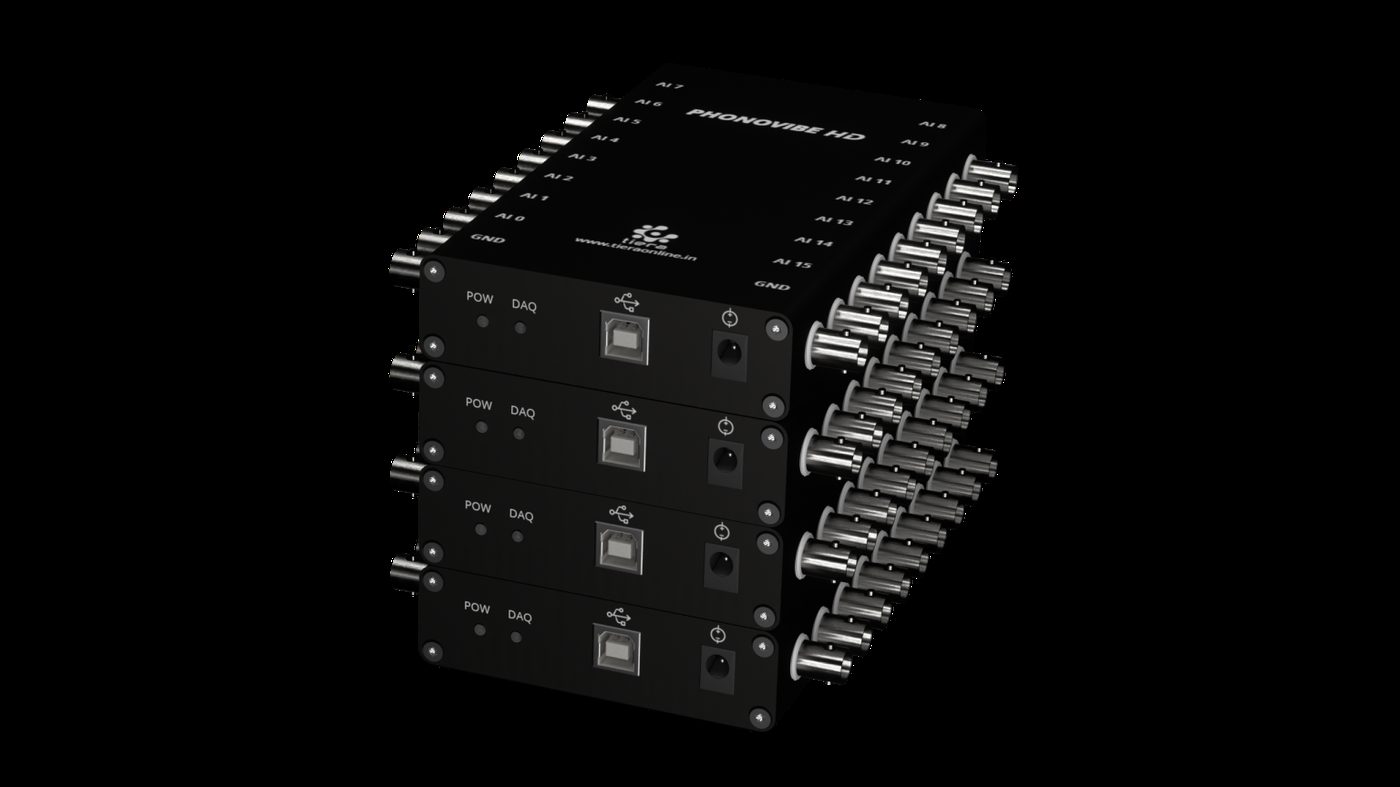
PhonoVibe Series — Sound & Vibration DAQ
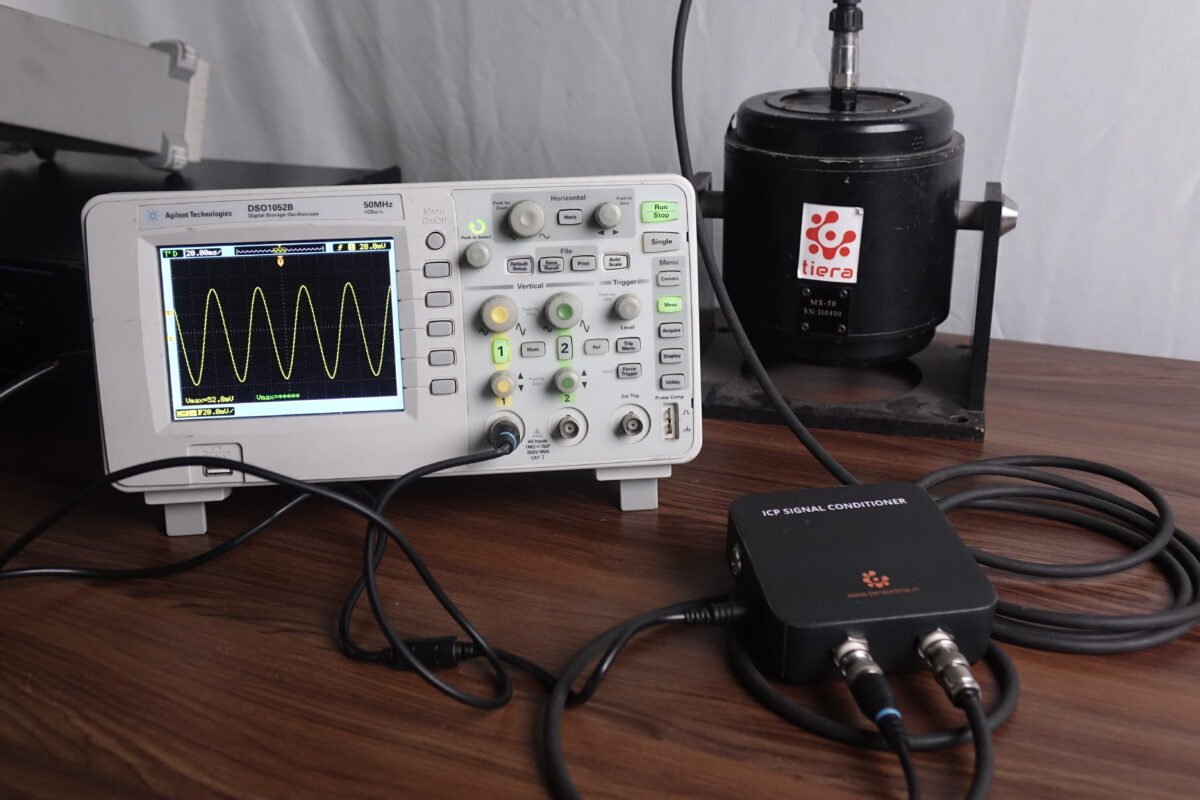
Capture the bearing comb you just predicted: 24-bit simultaneous sampling with IEPE sensor power, from a 2-channel field kit to a 16-channel lab.
- ADC resolution
- 24-bit
- Channels
- 2 / 4 / 8 / 16 (D, Q, O, HD)
- Bandwidth
- 2 Hz – 20 kHz (D); 0.5 Hz – 60 kHz (Q/O/HD)
- Sensor power
- 24 V, 4 mA constant current (IEPE/ICP/CCLD)
- Calibration
- Factory calibration certificate, 1-year validity
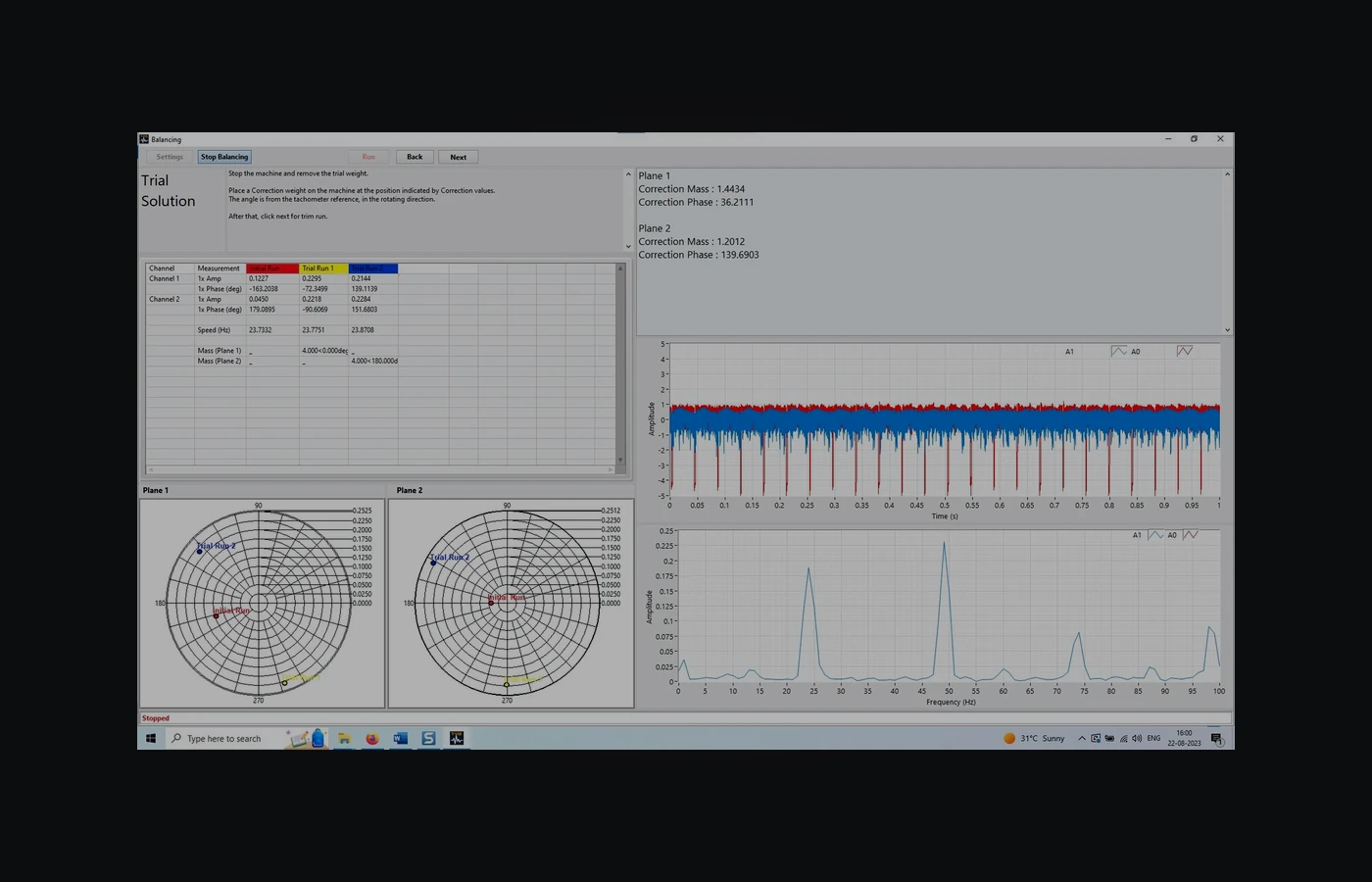
TVIB — Sound & Vibration Analysis Software
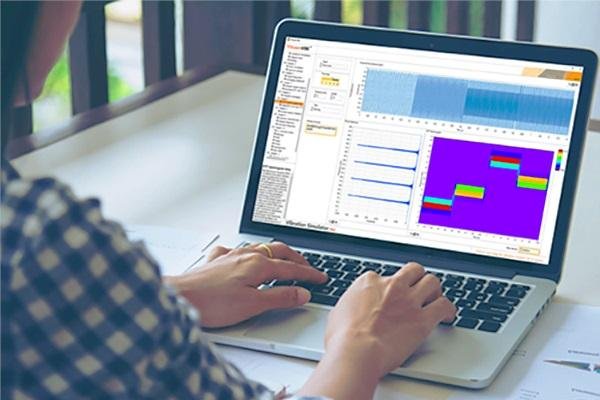
Drop harmonic and sideband cursors exactly on the BPFO, BPFI, BSF and FTF lines this calculator gives you, and check the spectrum line by line.
- FFT size
- Up to 102,400 points
- Cursors
- Harmonic, band and sideband — time and frequency domain
- Base module
- TSAP201 — free with every PhonoVibe DAQ
- OS
- Windows 10 / 11 (32-bit or 64-bit)
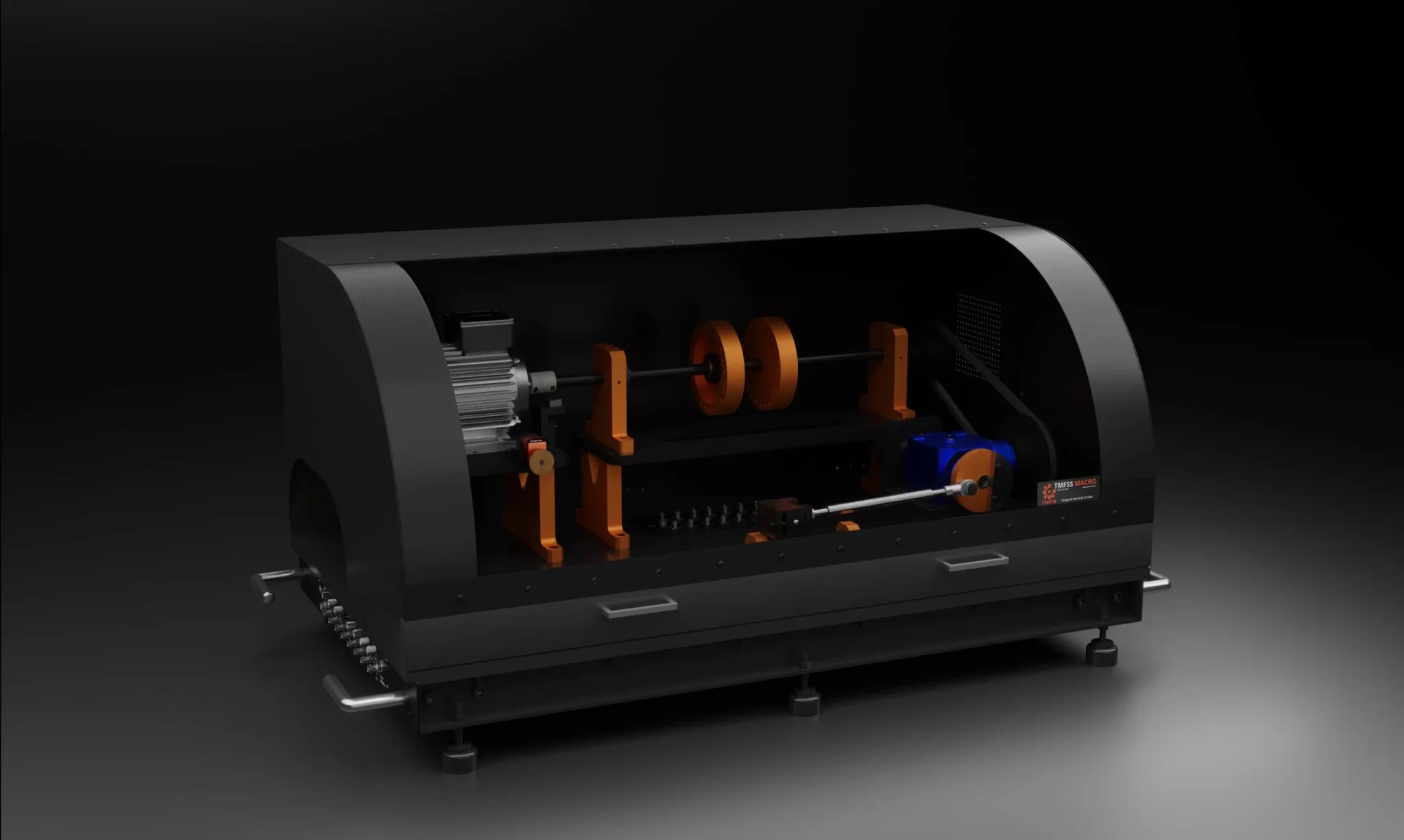
TMFSS — Machinery Fault Signature Simulator
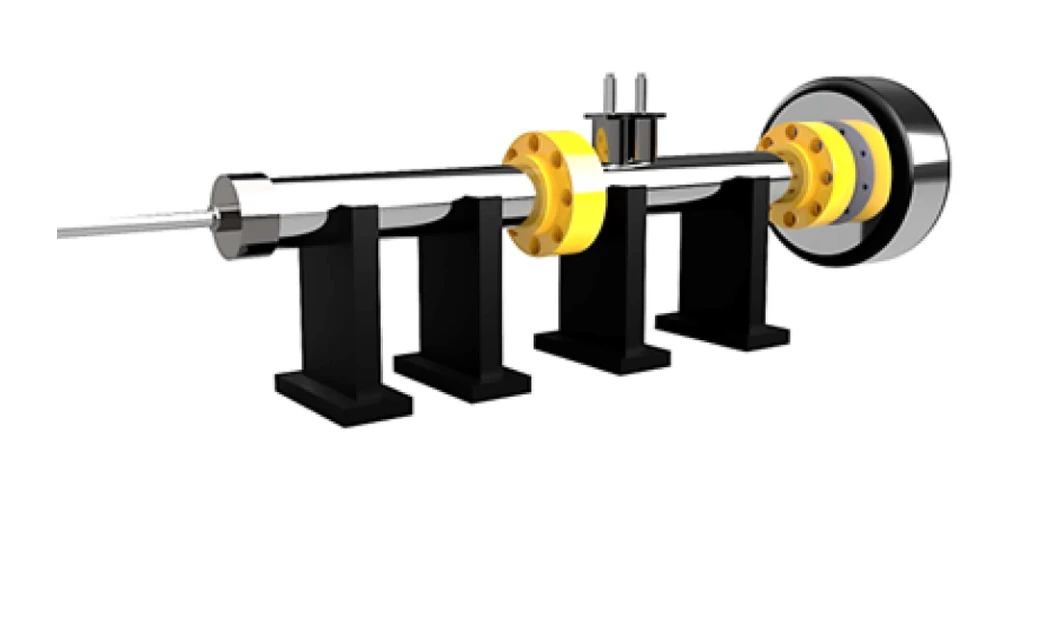
Seed real outer-race, inner-race, cage and rolling-element defects on a benchtop machine — predict the comb with the formulae, then measure it and watch the two agree.
- Fault library (Macro)
- 30+ faults in base kit, extensible with add-on kits
- Bearing faults
- Outer race, inner race, cage, rolling element
- Speed control
- VFD with WiFi software
- Tachometer
- Built-in, analog output
- Warranty
- 1 year; AMC available
From the TIERA store
The kit for this job
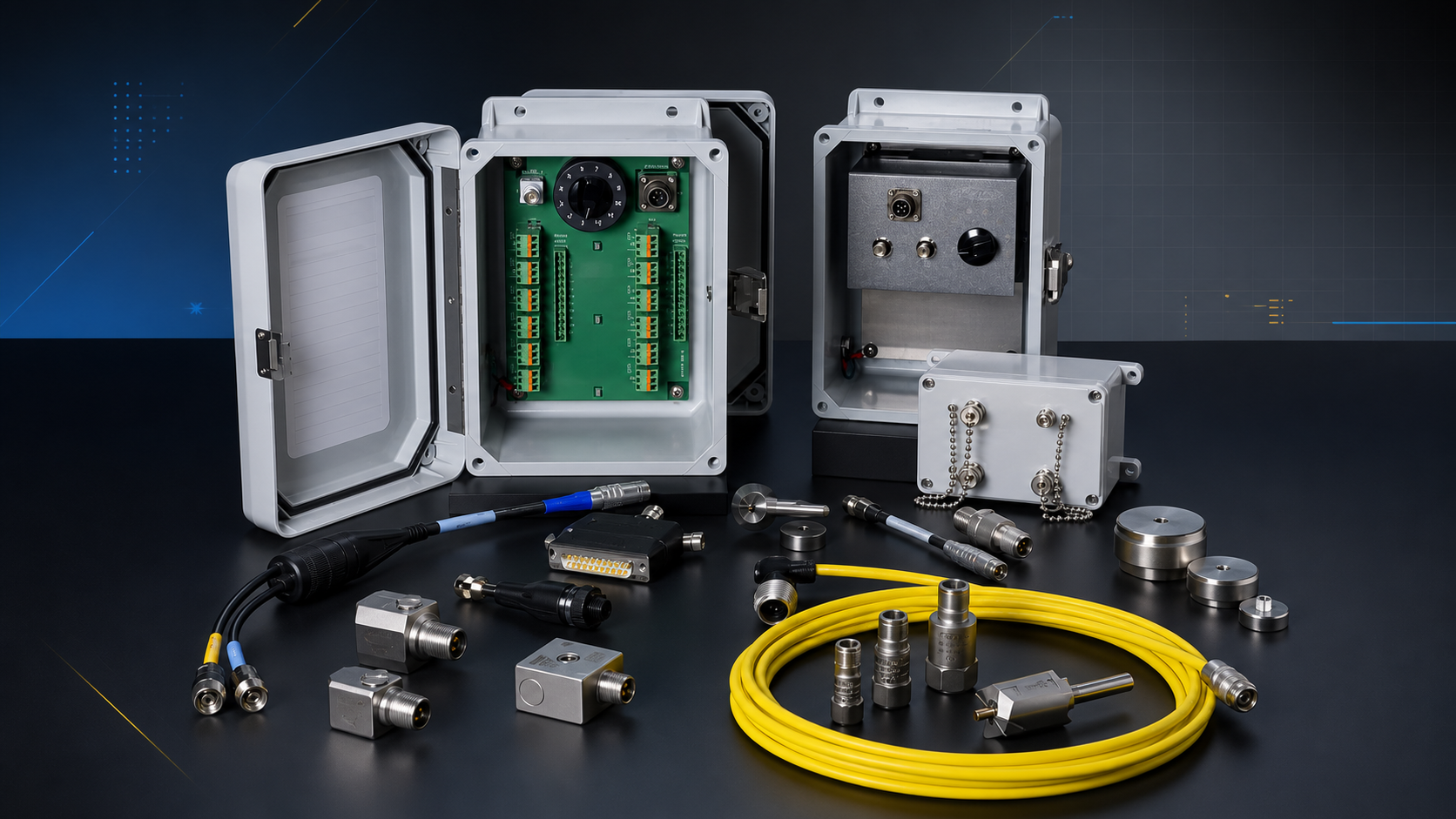
What we would actually put in front of someone doing the measurement this post describes — not the whole catalogue.
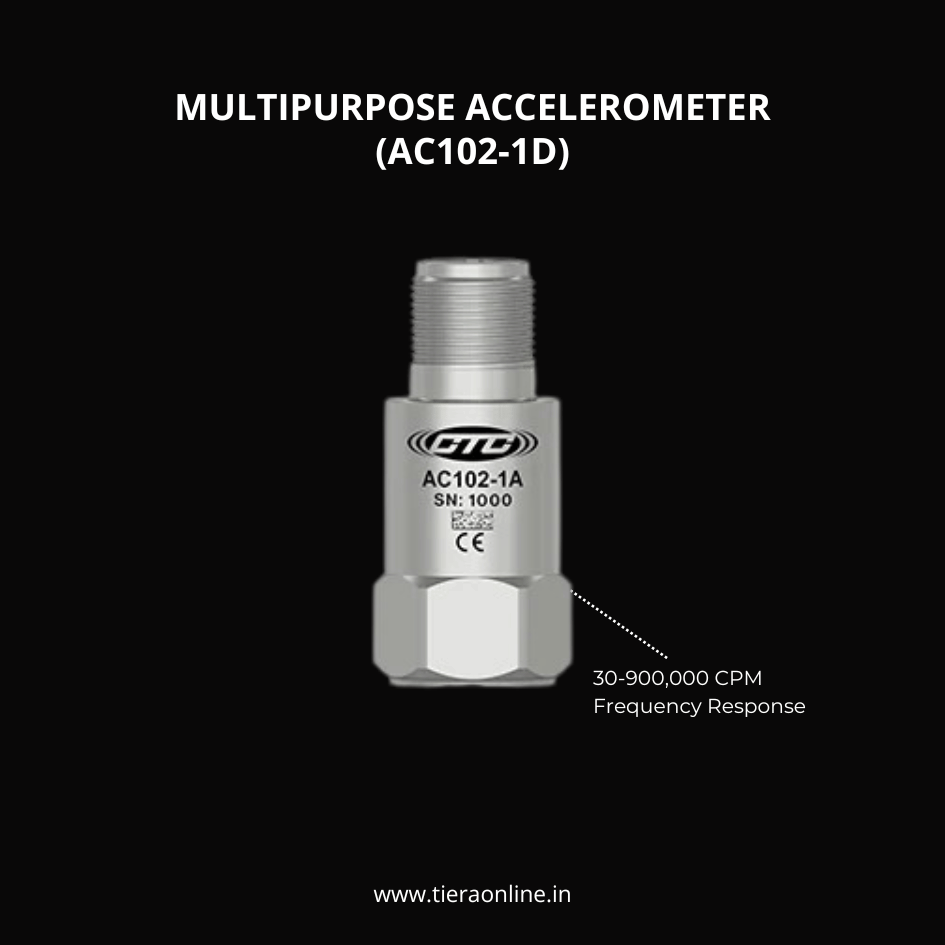 AC102-1D, MULTIPURPOSE ACCELEROMETERMULTIPURPOSE ACCELEROMETER, TOP EXIT 2 PIN CONNECTOR, 100 MV/G, ±10% 30-900,000 CPM Frequency Response (±3dB) -58 to 250 °F (-50 to 121 °C) Temperature Range Welded, Hermetic Sealing CTC’s Best Selling, Multi-Purpose Sensor Ideally Suited for Thousands of Applications₹14,750View →
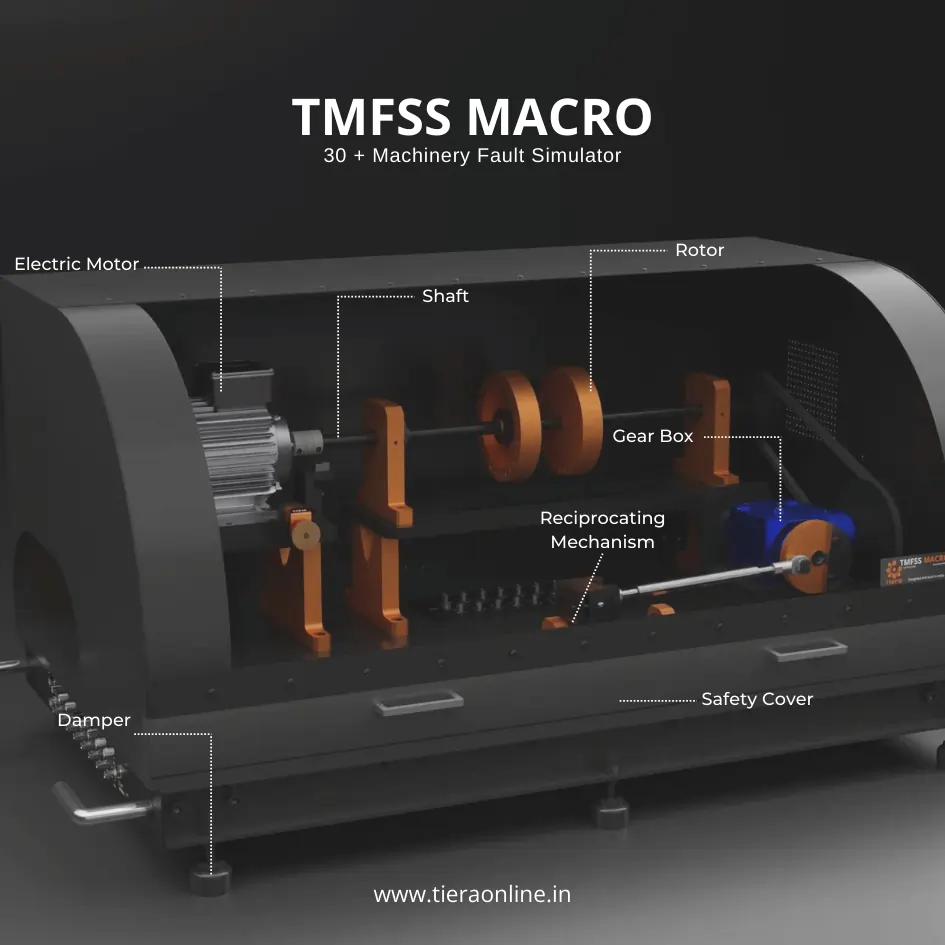 Machinery Fault Signature SimulatorTiera’s Machine Fault Simulator (TMFSS) is a valuable tool for industries and researchers, simulating over 30 real-world faults such as: Bearing faults: outer race defects, inner race defects, cage defects. Motor faults: stator faults, rotor faults, electrical unbalance. Gearbox faults: gear wear, misalignment, gear tooth damage. And more.₹13,53,600View →
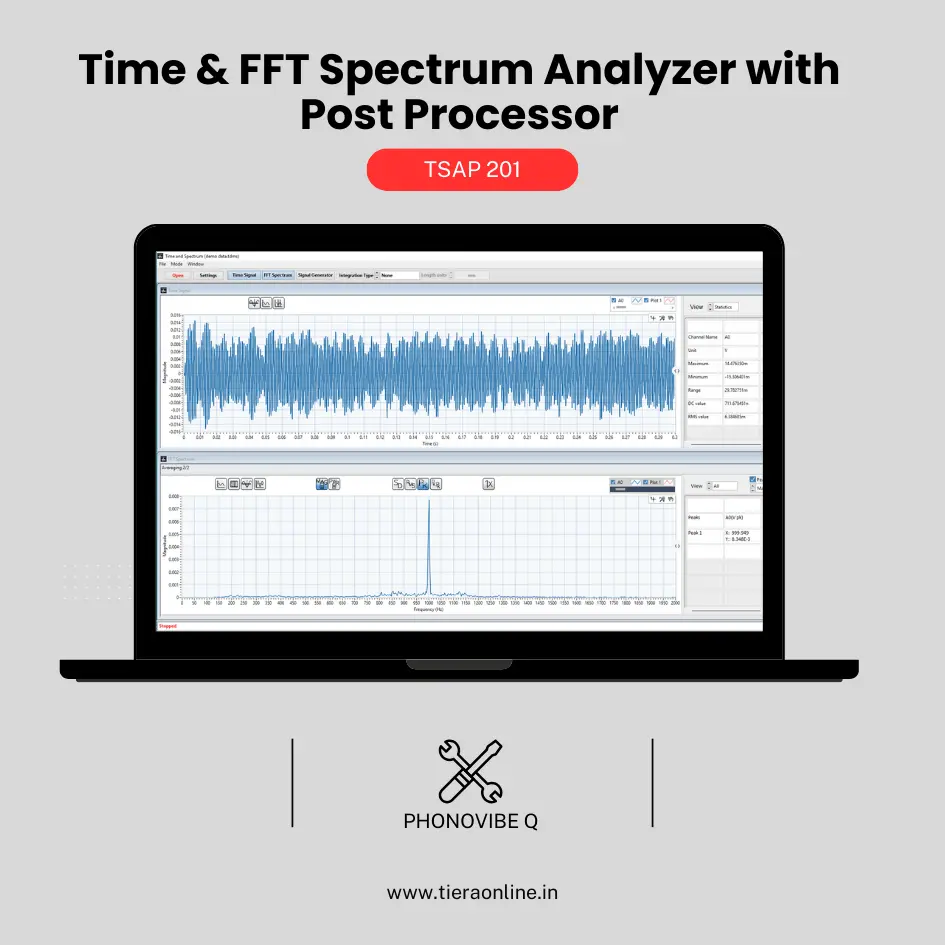 TSAP 201 -Time & FFT Spectrum Analyzer with Post Processor (Phonovibe Q)Use Cases Bump Test Product Development Off route Machine Vibration analysis. Drop Test Product Development & Research₹34,560View →
Use cases
Where this shows up in the field
Predict the frequencies here — then capture, mark and practise them on TIERA's stack.
A predicted frequency is only useful if your measurement chain can resolve it. PhonoVibe DAQs capture vibration at 24-bit with IEPE sensor power across 2- to 16-channel models, and TVIB's TSAP201 analyser puts harmonic and sideband cursors directly on the spectrum — so the BPFO you computed above becomes a cursor you drop on real data and check line by line.
And because the best way to learn these signatures is to make them happen, the TMFSS simulator seeds real outer-race, inner-race, cage and rolling-element defects on a benchtop machine — you predict the comb with the formulae, then measure it and watch the two agree.
- PhonoVibe — 24-bit USB DAQ, 2 to 16 channels, IEPE sensor power, TVIB software bundled
- TVIB TSAP201 — FFT with harmonic and sideband cursors to lay a ruler over the comb
- TMFSS — seeded bearing defects (outer race, inner race, cage, ball) for hands-on practice
Where this sits on the TIERA learning ladder.
The theory behind this article is covered free, in full, by the TIERA 101 primers: Bearing & Gear Analysis 101. They are self-paced, interactive, and end in an exam and a certificate.
TCAT adds structured analyst training with proctored examinations at exams.tieraonline.in — the free 101 primers cover the theory, TCAT certifies you can apply it.
TIERA 101 is a free introductory primer, not an accredited ISO certification, and its hours do not count towards the formal training ISO 18436 requires.