
A spectrum is the analyst’s most powerful view of a machine, but it does not appear by magic. It is the product of a chain of choices — how fast you sample, how many lines you ask for, which window you apply, how many averages you take. Get those choices wrong and a real fault can hide, or a harmless artefact can look like a problem. Signal Processing 101 opens that black box so the numbers on your analyzer become numbers you understand and can defend.
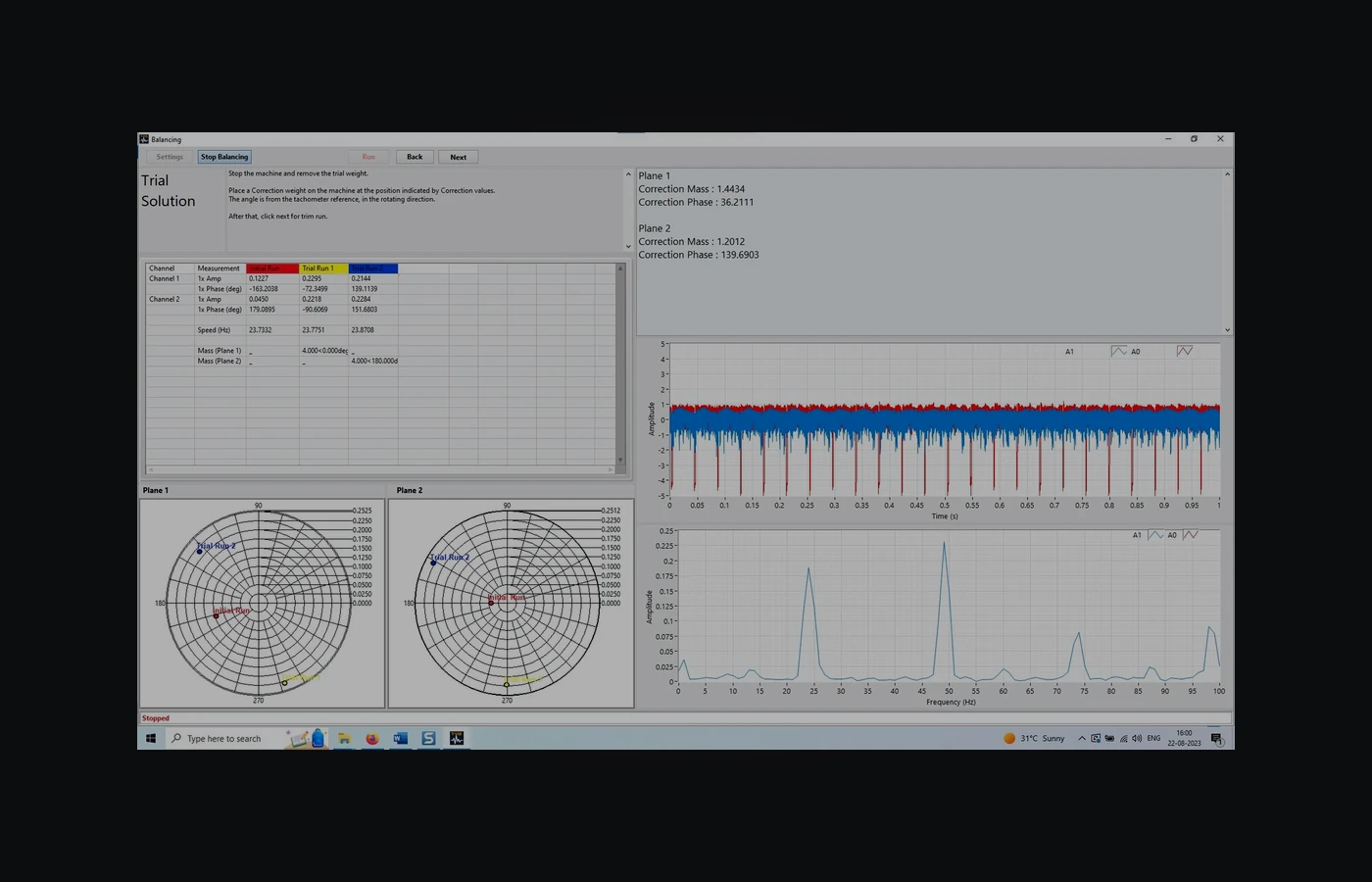
Starting from a plain time waveform, you will follow the path to a clean spectrum: sampling and the Nyquist limit, why aliasing happens and how anti-alias filtering prevents it, the FFT and the trade-off between frequency span and resolution, the role of windows and spectral leakage, and how averaging beats down random noise. The course finishes with envelope demodulation — the technique that makes weak, repetitive bearing and gear impacts jump out of the noise floor. No heavy mathematics is required; the emphasis is on intuition and correct settings.